Vanity Stone
Natural and engineered stone surfaces, sourced and fabricated around bespoke bathroom joinery.
ZAUS Custom Vanity Stone provides project-specific stone sourcing and fabrication for residential developments, renovations and architect-designed homes.
Rather than limiting bathroom joinery to predetermined vanity-top colours, materials and standard dimensions, each stone package can be developed around the architectural intent, vanity design, required dimensions, performance requirements and project budget.
From refined natural marbles and durable granites through to architectural quartzites, expressive feature stones and selected engineered surfaces, the stone can be coordinated with the vanity cabinetry, basins, tapware and surrounding bathroom finishes as part of one complete composition.
Natural Stone Selection
Natural stone introduces genuine geological character into bathroom joinery, with each slab carrying its own combination of colour, veining, crystalline structure, mineral movement and tonal variation.
Depending on the project, stone families can include:
Marble
Quartzite
Granite
Travertine
Limestone
Dolomite
Other specialist architectural stones
Where a particular stone, colour or visual character has been nominated, available material can be sourced and reviewed before fabrication.
This allows the stone selection to respond to the actual architectural direction of the bathroom rather than requiring the design to conform to a limited predetermined finish range.
Featured Vanity Stone Collection
The ZAUS featured collection presents 11 natural and engineered stone finishes selected to demonstrate the breadth of material directions available for bespoke bathroom vanities.
These provide a curated starting point rather than a limitation on the materials that can be sourced for an individual project.
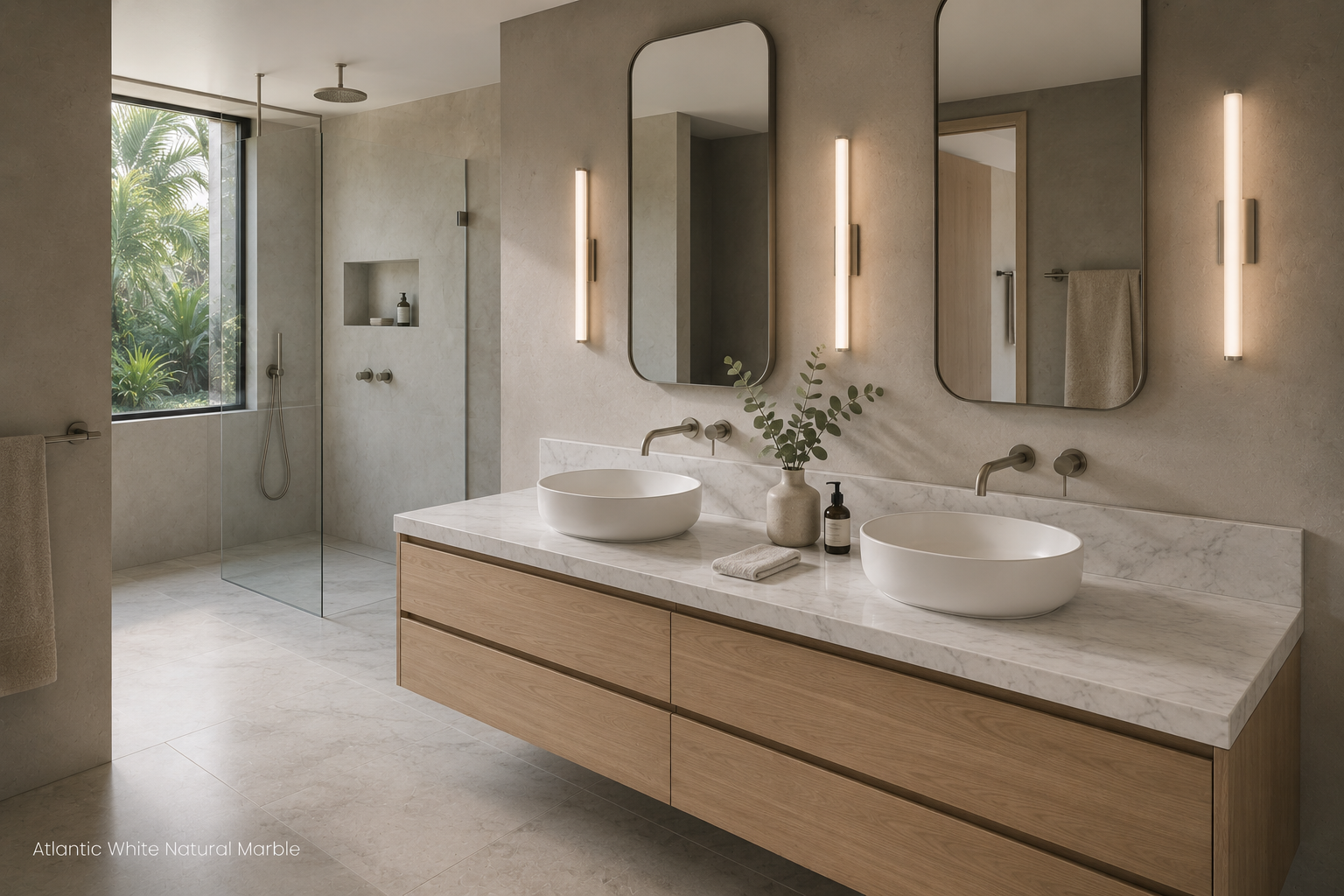
Atlantic White Natural Marble
A refined pale natural marble with a soft white to cool-grey background, subtle tonal variation and understated mineral movement.
Atlantic White is particularly suited to calm, minimal bathroom palettes where the stone is intended to complement the surrounding architecture rather than dominate it.
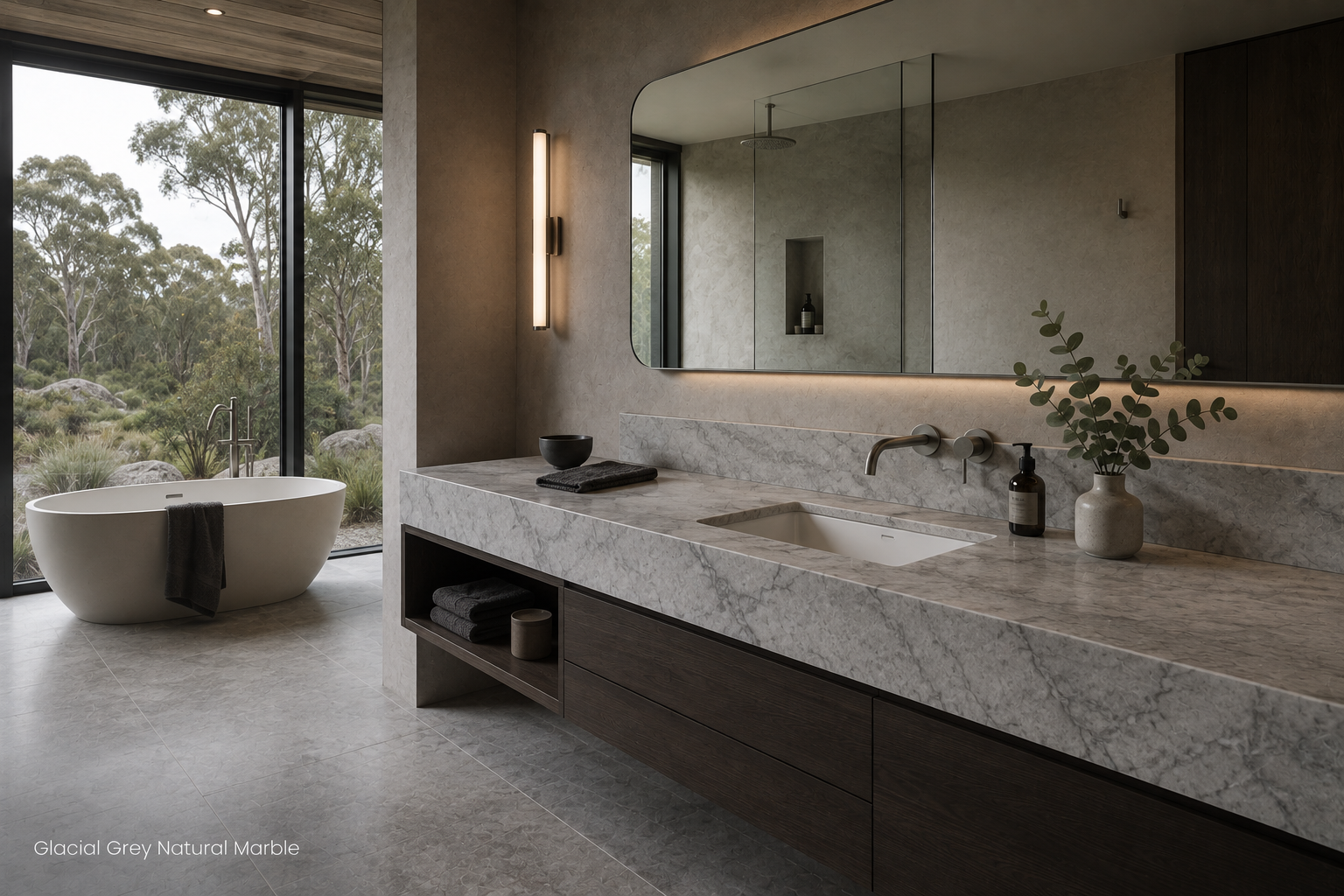
Glacial Grey Natural Marble
A light natural marble characterised by flowing grey mineral movement across a soft white-to-grey background.
More expressive than quieter white marbles while remaining neutral and sophisticated, Glacial Grey works particularly well alongside darker timber, brushed metal and cool architectural finishes.
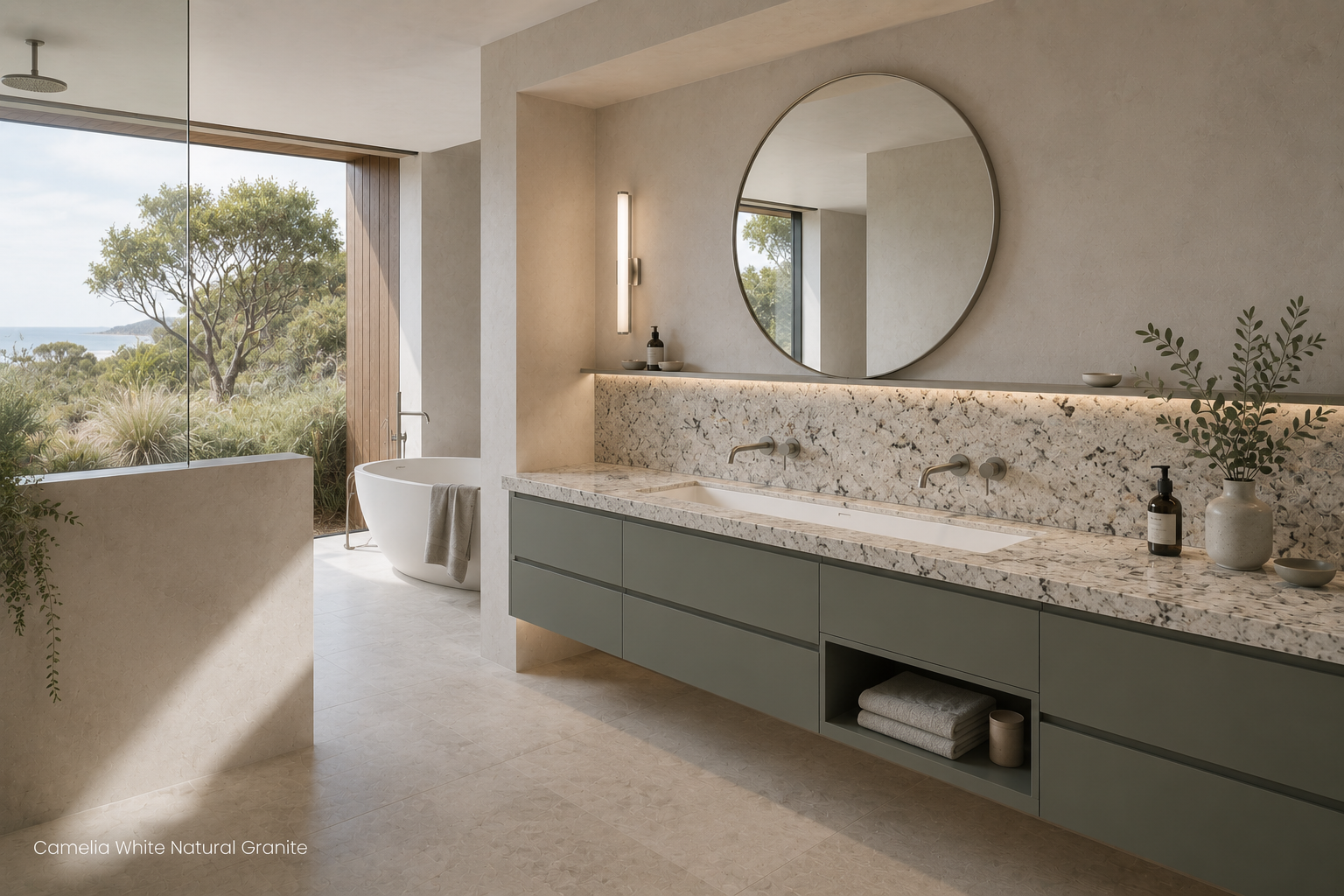
Camelia White Natural Granite
A naturally patterned light granite combining white and pale-grey mineral structure with contrasting darker crystalline inclusions.
Its granular geological character provides a distinctly different appearance from veined marble while creating a durable and highly textural vanity surface.
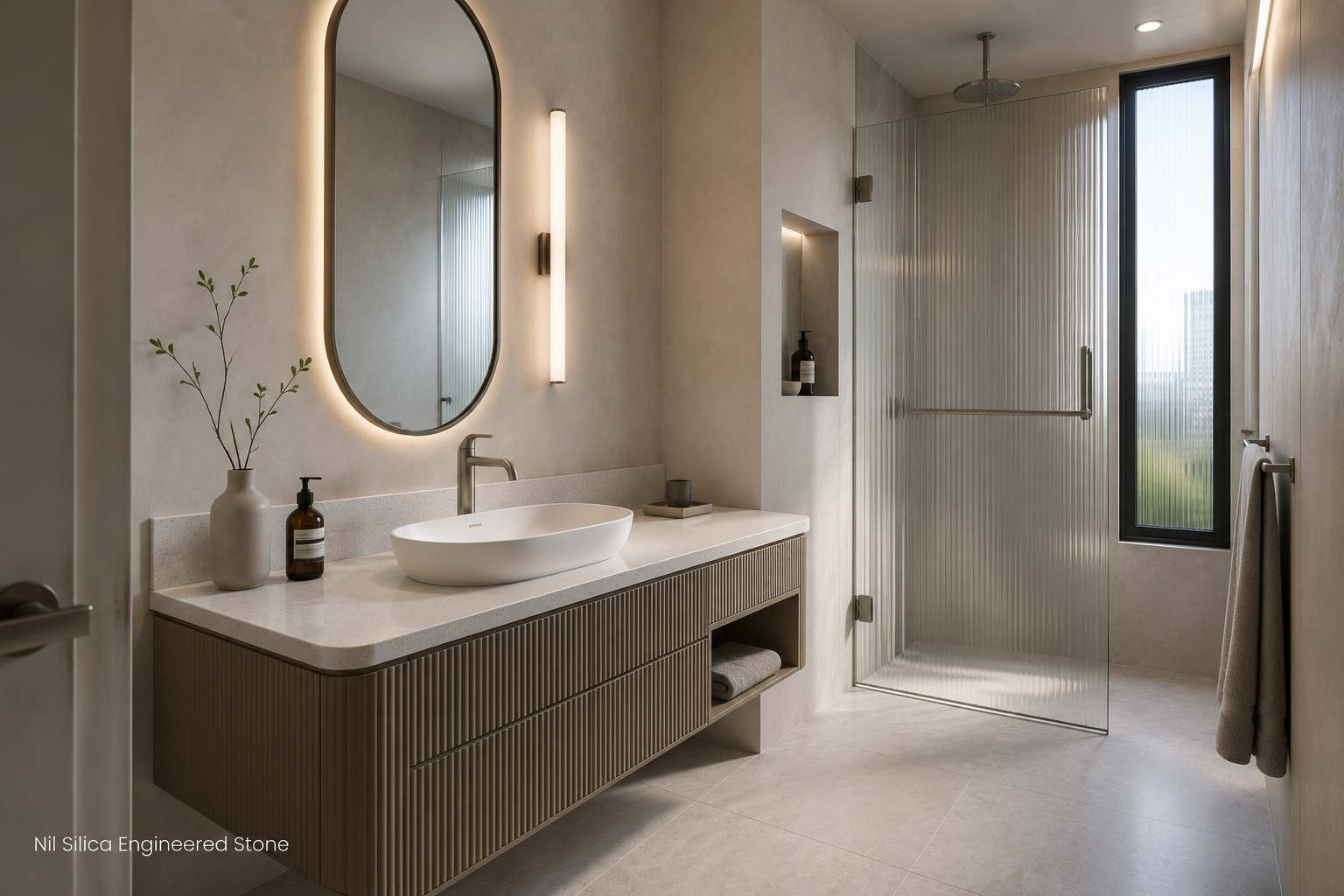
Nil Silica Engineered Stone
A clean contemporary manufactured surface with a restrained pale appearance and controlled tonal movement.
Nil Silica provides an alternative where consistency, repeatability and a quieter visual character are preferred over the natural variation of quarried stone.
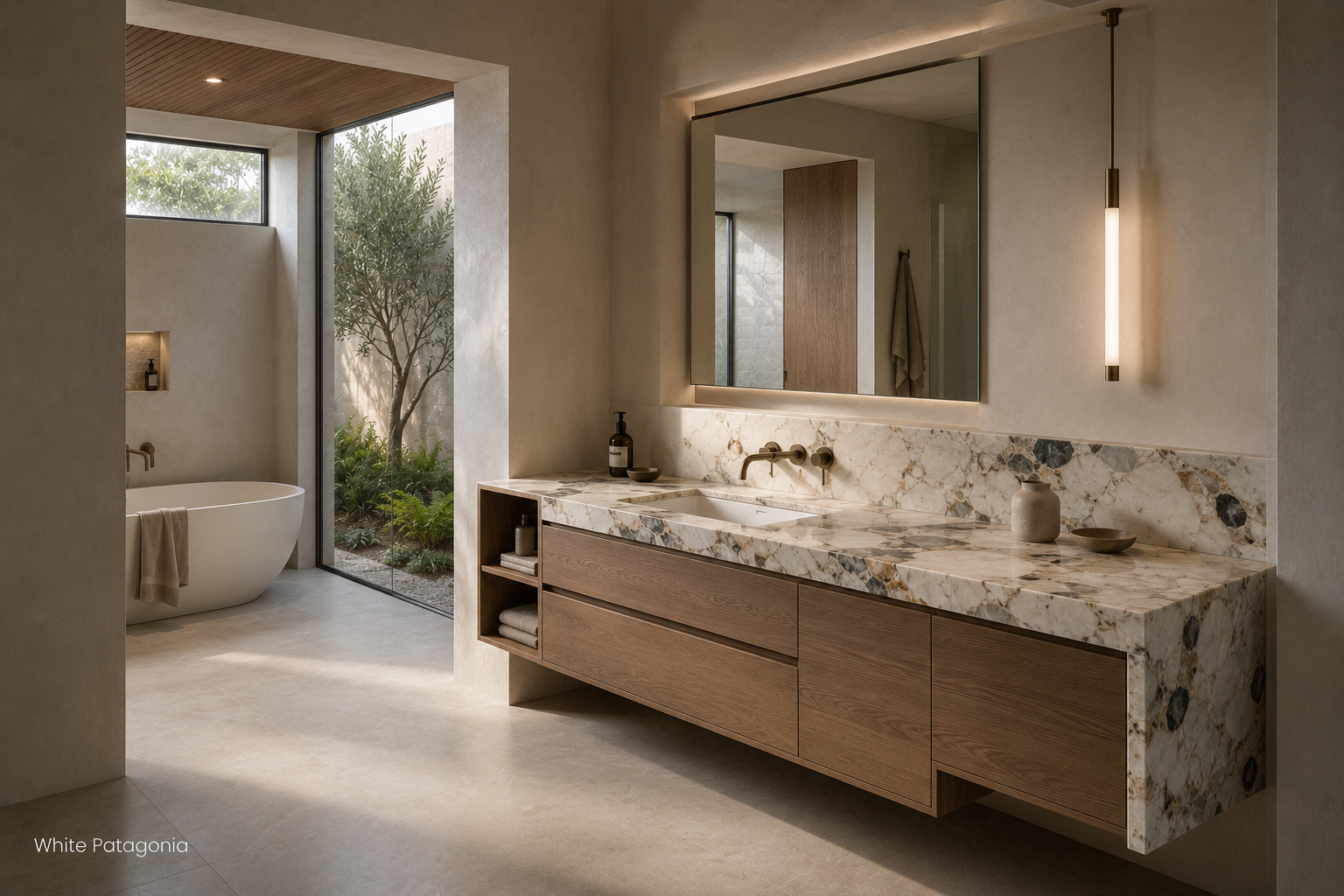
White Patagonia
A dramatic light-toned feature surface with expressive mineral movement and strong visual depth.
White Patagonia is suited to bathrooms where the vanity stone is intended to become a significant component of the room's architectural identity rather than simply providing a neutral work surface.
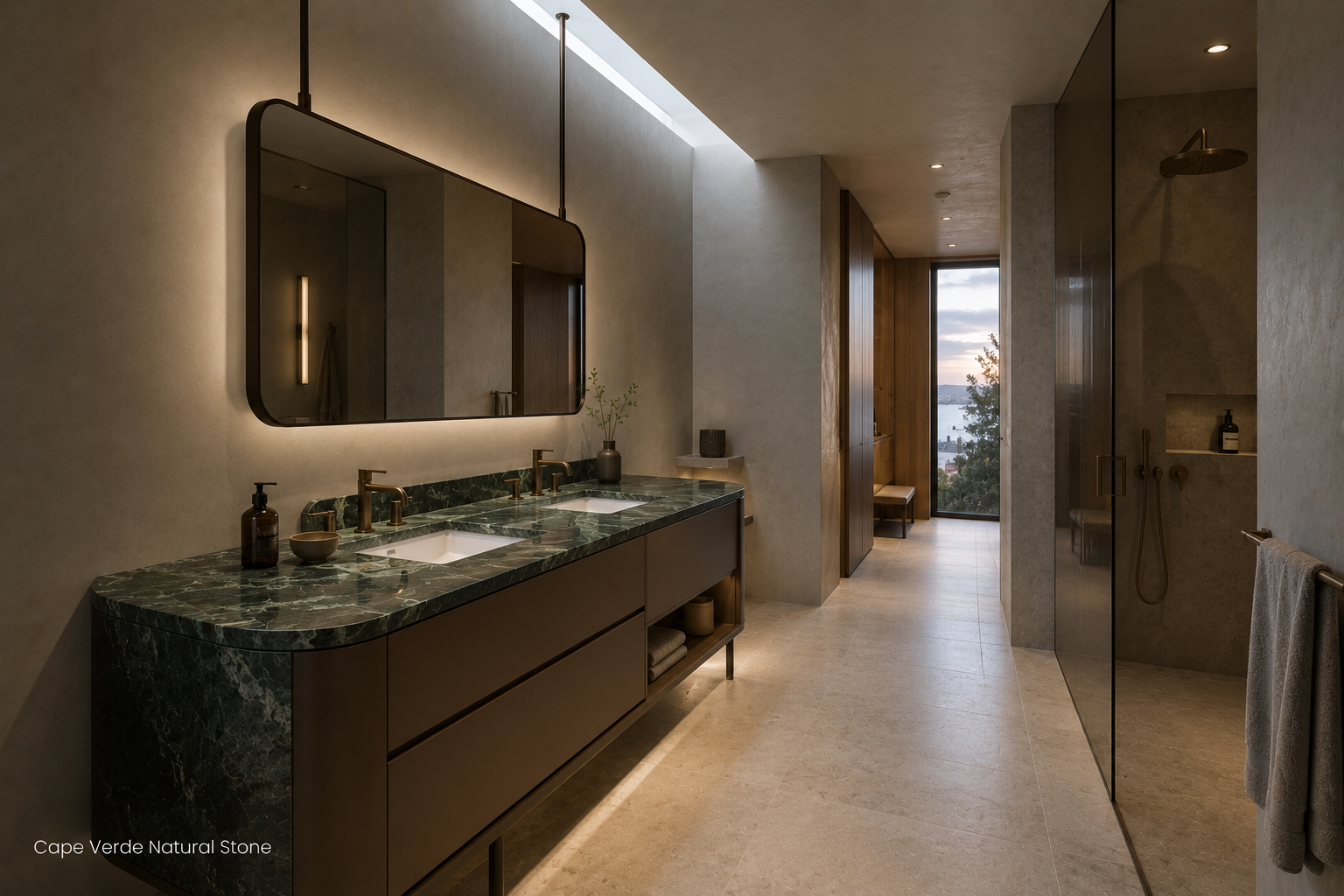
Cape Verde
A deep green architectural stone finish with rich mineral character and a darker, more dramatic visual presence.
Cape Verde provides an alternative to conventional white, grey and beige vanity surfaces and can coordinate particularly effectively with natural timber, bronze-toned details and restrained neutral interiors.
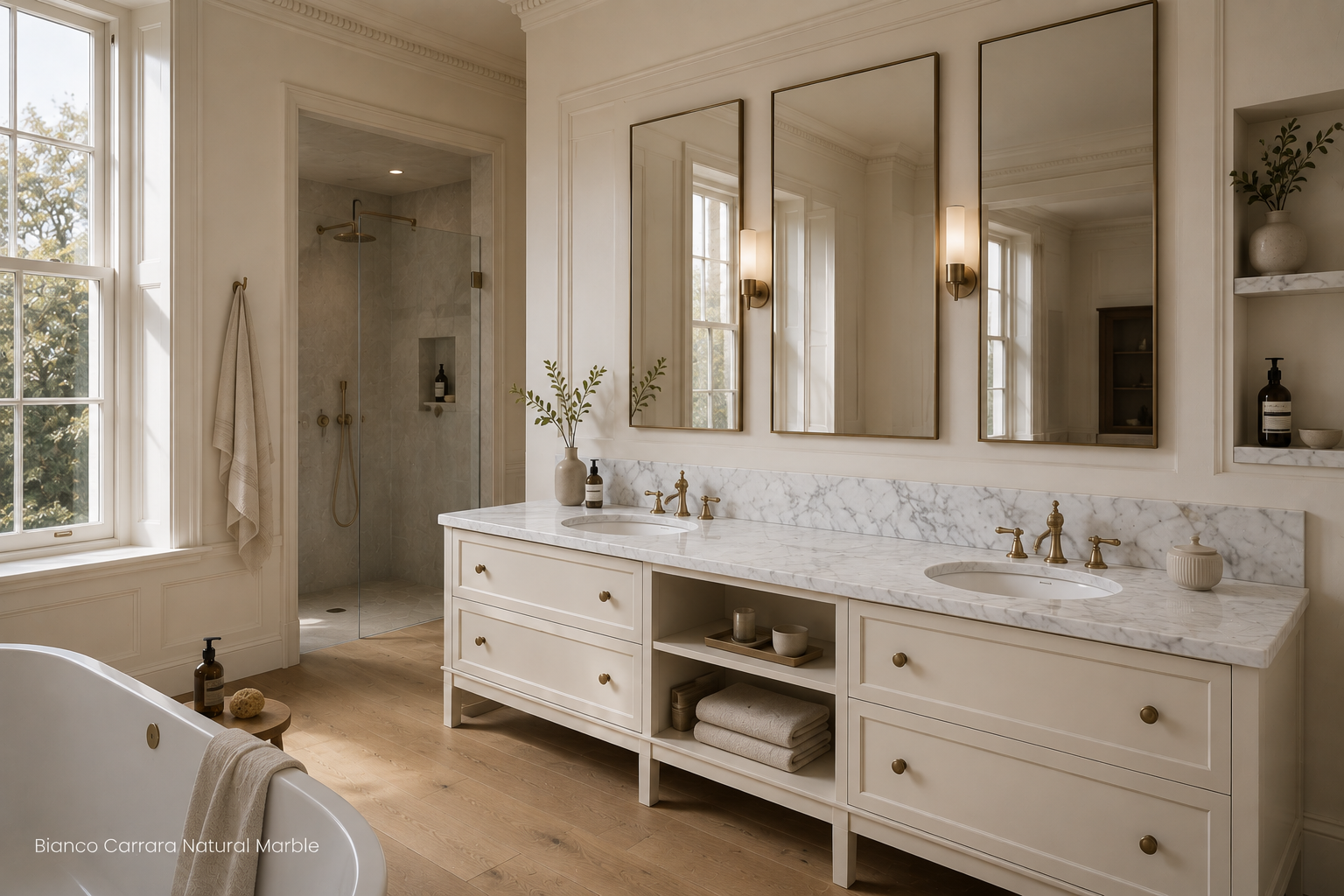
Bianco Carrara Natural Marble
A timeless Italian marble with a soft white to pale-grey background and fine, naturally irregular grey veining.
Carrara's quieter mineral movement allows it to work across contemporary and more traditional architectural interiors without relying on exaggerated statement veining.
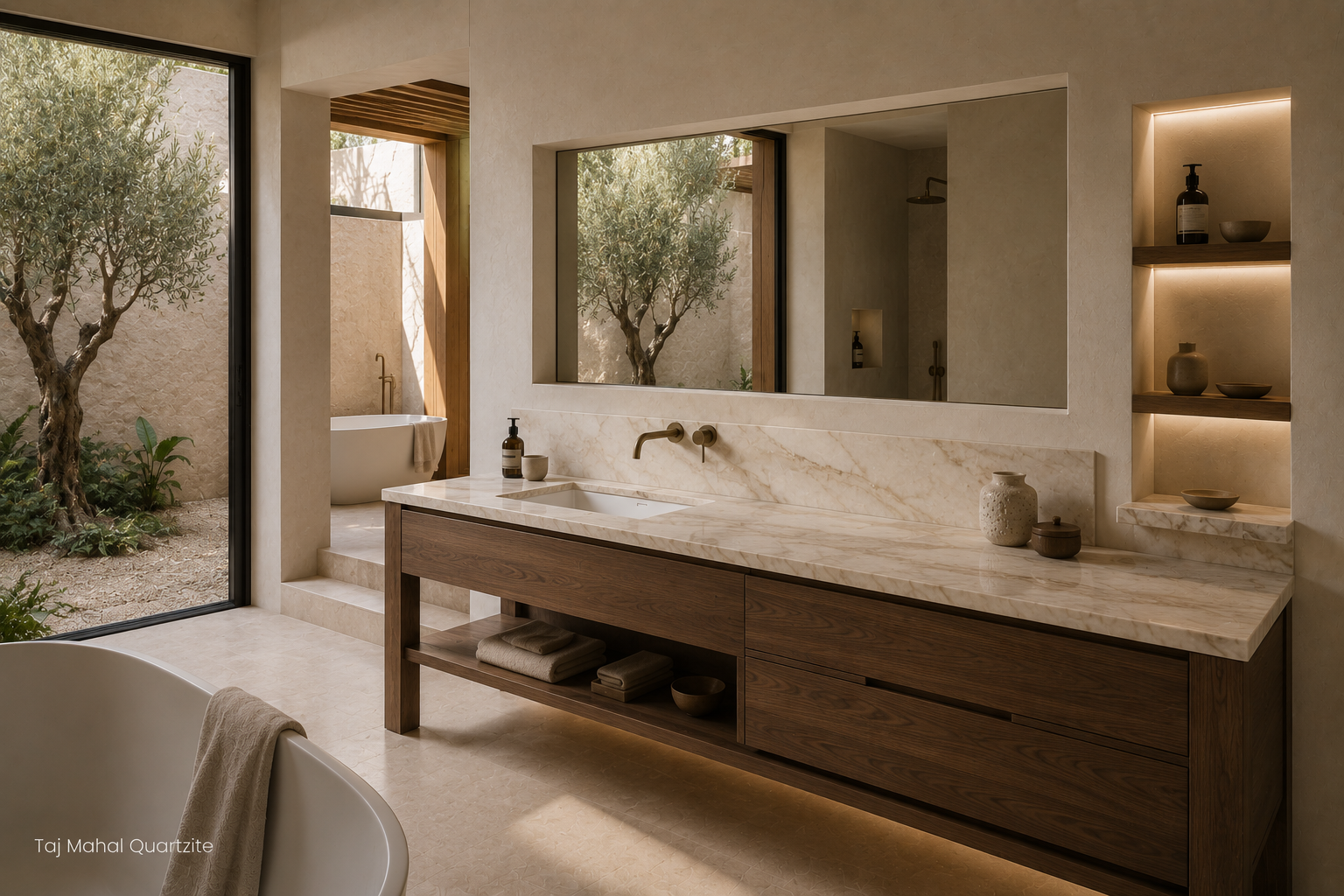
Taj Mahal Quartzite
A refined natural quartzite characterised by a warm ivory-to-cream background with soft beige, taupe and muted caramel mineral movement.
Its layered geological depth introduces warmth without becoming heavily yellow or brown, making it particularly suited to sophisticated neutral interiors and natural timber joinery.
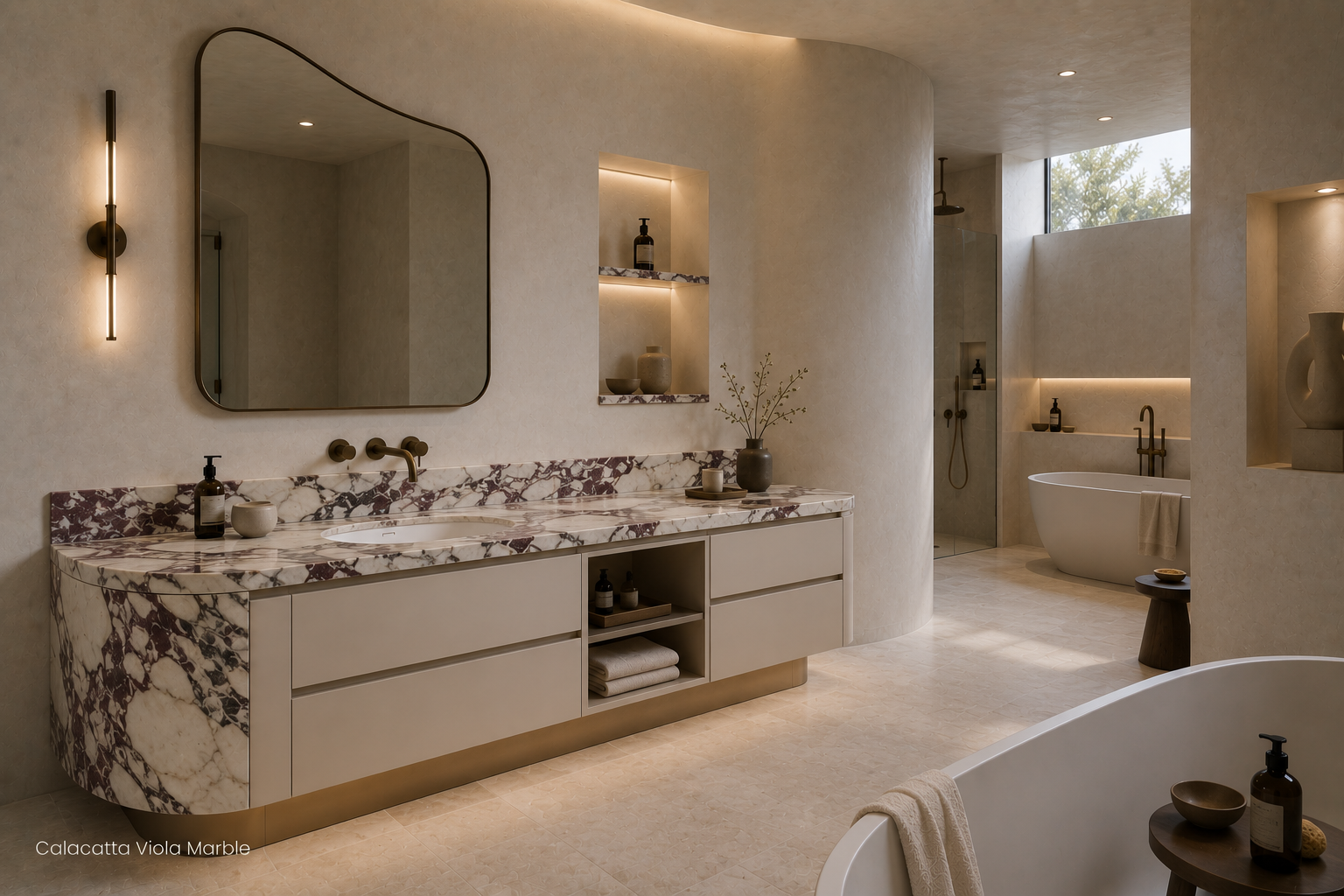
Calacatta Viola Marble
An expressive Italian natural marble combining a creamy ivory background with distinctive burgundy, wine-red, plum, grey and taupe mineral formations.
Its naturally fractured and brecciated character makes Calacatta Viola particularly suited to feature vanities where the stone itself is intended to become an architectural focal point.
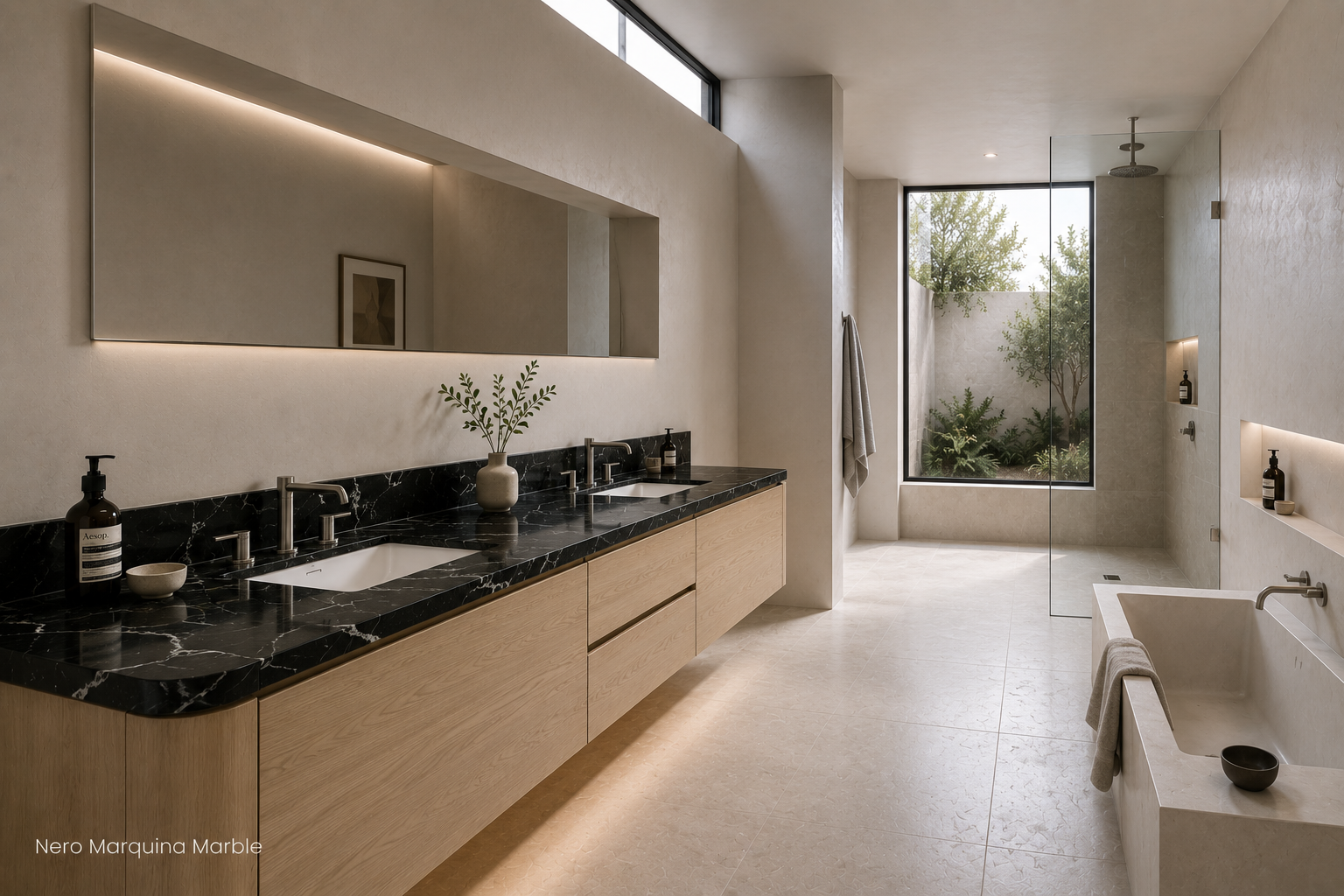
Nero Marquina Marble
A deep black natural marble distinguished by irregular white calcite veining and generous areas of quieter dark stone.
Used selectively, Nero Marquina creates precise graphic contrast against pale cabinetry, timber, brushed metal and lighter architectural surfaces.
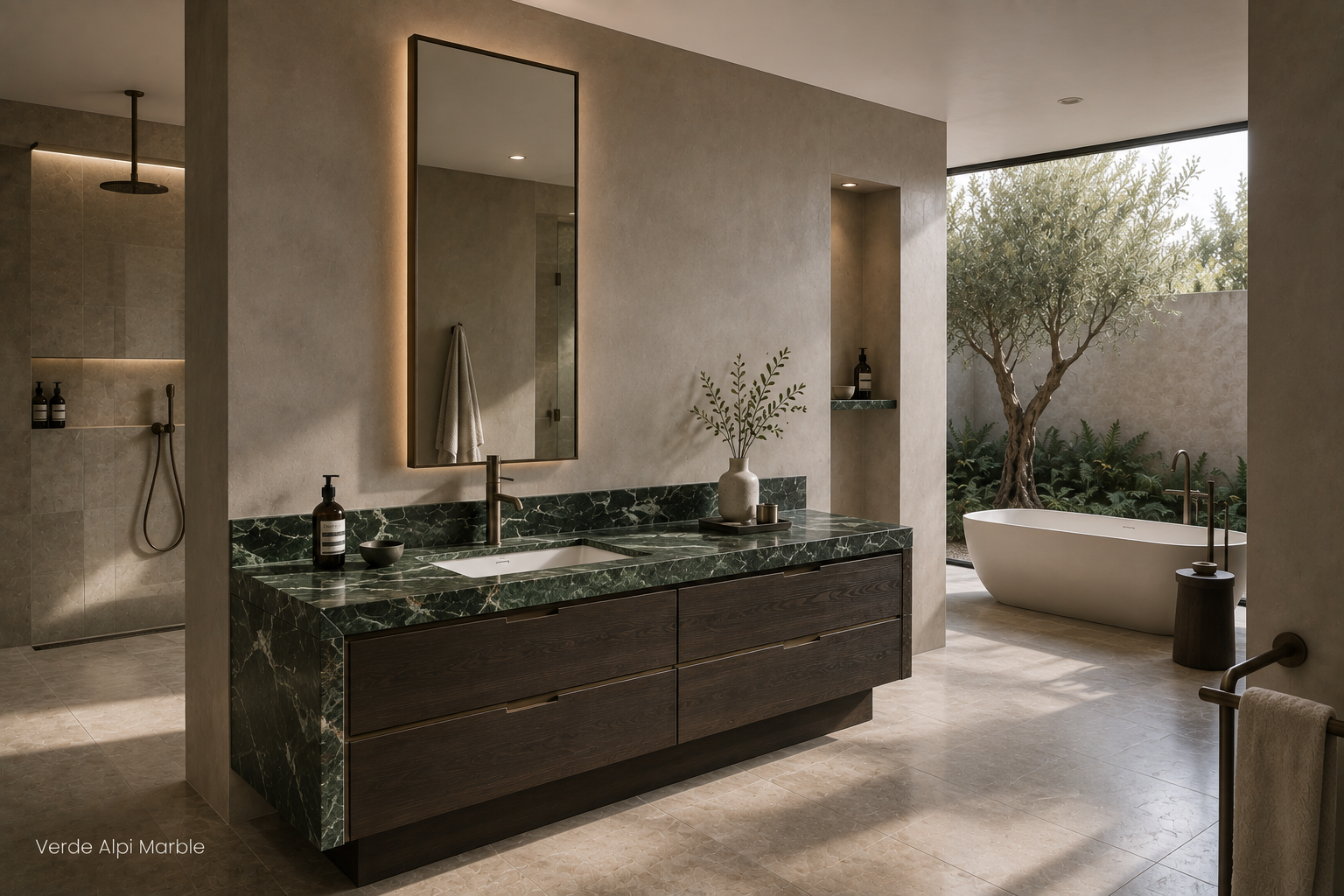
Verde Alpi Marble
A richly coloured Italian natural marble with a deep forest-green base and naturally irregular white and pale-grey mineral fractures.
Verde Alpi provides one of the strongest material statements within the collection, combining substantial colour with the geological variation and depth of genuine natural stone.
These 11 finishes represent a curated starting point rather than a fixed limitation. Alternative stones, colours and slab selections can be sourced according to the project's architectural direction, availability, performance requirements and budget.
Custom Sizing & Fabrication
Vanity stone can be fabricated around the actual dimensions and configuration of the bathroom joinery rather than requiring the vanity to conform to predetermined finished sizes.
Subject to slab availability, material characteristics and fabrication requirements, applications can include:
Single and double vanity tops
Wall-to-wall vanity surfaces
Floating vanities
Freestanding vanity units
Vessel basin installations
Undermount basin cut-outs
Semi-recessed basin applications
Tap and fixture penetrations
Vanity splashbacks and upstands
Stone aprons and fascia details
Mitred stone edges
Feature end panels
Matching shelves and ledges
Custom-format bathroom applications
This allows the stone package to respond directly to the vanity and bathroom architecture rather than forcing the design around a standard prefabricated top.
Basin Integration
The relationship between the basin and stone is one of the most important elements of a custom vanity.
Depending on the selected basin and vanity design, the stone package can accommodate:
Vessel basins
Undermount basins
Semi-recessed basins
Single-basin arrangements
Double-basin arrangements
Custom basin positioning
Associated tap and fixture penetrations
Basin dimensions, positioning and required cut-outs should be confirmed before fabrication so the stone and cabinetry can be developed around the selected sanitaryware.
Slab Selection & Natural Variation
Natural stone is inherently unique.
Colour, veining, crystalline structure, fissures, mineral concentrations and tonal movement can vary between individual slabs and across different areas of the same slab.
For feature vanity applications, available slabs can be reviewed before fabrication to consider:
Colour
Pattern distribution
Mineral movement
Vein direction
Cut position
Relationship between adjoining pieces
This becomes particularly important with expressive materials such as Calacatta Viola, Verde Alpi and Taj Mahal Quartzite, where the position of individual cuts can materially influence the finished appearance.
Where multiple vanities are supplied within the same project, selections can also be coordinated either to establish a consistent material language or to give individual bathrooms their own identity.
Vanity Stone Detailing
Stone fabrication can be developed around the architectural and joinery detailing of each vanity.
Considerations can include:
Finished stone thickness
Edge profiles
Mitred edges
Stone aprons
Basin positioning and cut-outs
Vessel basin penetrations
Tap-hole configurations
Wall-mounted tapware coordination
Splashback and upstand heights
Vein and directional alignment
Junctions between stone and cabinetry
Matching shelves and ledges
Feature stone end panels
Wall-to-wall installation conditions
Relationships between horizontal and vertical stone pieces
For expressive natural materials, significant veins, fractures and mineral formations can be considered when determining cut positions rather than treating the stone as a generic repeating surface.
Splashbacks & Upstands
Stone can extend beyond the vanity surface into splashbacks, upstands and selected vertical elements.
Depending on the bathroom design, these can be developed as subtle functional details or become more prominent architectural features.
Where the same natural stone continues vertically, vein direction, pattern distribution and the relationship between adjoining pieces can be considered during fabrication to create a more resolved material composition.
Feature Stone Ends & Aprons
Stone can also be used to create greater visual weight around selected vanity designs through mitred aprons, fascia details and feature end panels.
These elements can allow the vanity surface to read as a more substantial architectural form while maintaining a practical underlying stone thickness.
Final construction and edge detailing should be coordinated with the vanity cabinetry and selected stone before fabrication.
Wall-to-Wall Vanities
Custom fabrication is particularly valuable for wall-to-wall vanity installations where the finished surface needs to respond closely to the actual room and cabinetry dimensions.
These applications can require careful coordination of:
Finished wall dimensions
Cabinet positioning
Basin locations
Tapware
Splashbacks
Side junctions
Stone tolerances
Installation conditions
Final site dimensions should be confirmed at the appropriate stage before fabrication.
Natural & Engineered Stone Options
ZAUS can source both natural stone and selected engineered or manufactured surfaces where appropriate to the project specification and applicable Australian requirements.
Engineered surfaces can provide greater consistency in colour and pattern and may suit developments where repeatability across multiple bathrooms is important.
Natural stone provides a different material character through its individual geological formation, allowing marble, quartzite and granite to become distinctive architectural elements within the finished bathroom.
Material Selection
The appropriate surface can be considered according to the individual project's:
Design intent
Application
Performance requirements
Desired visual character
Availability
Budget
This allows different bathroom applications to receive materials appropriate to their individual design and functional requirements rather than applying the same surface solution throughout every project.
Vanity & Joinery Coordination
Stone performs best when considered alongside the other components of the vanity rather than selected as an isolated surface at the end of the design process.
The stone specification can be coordinated with custom vanity joinery, cabinet finishes, basin selection, tapware and associated bathroom fixtures so dimensions, penetrations and material junctions can be considered together.
This becomes particularly important for:
Wall-to-wall vanities
Double-basin configurations
Floating joinery
Feature stone ends
Custom basin arrangements
Architectural bathrooms
Small dimensional changes to the basin, cabinetry or tapware position can affect several adjoining components, making early coordination particularly valuable.
Coordination with Bathroom Finishes
Vanity stone can also be considered alongside the broader bathroom material palette.
Depending on the project, this can include:
Vanity cabinetry
Timber and timber-look finishes
Cabinet fronts
Basins
Tapware
Mirrors
Architectural handles
Wall finishes
Floor finishes
Shower finishes
Metal detailing
This allows the stone to operate as part of the overall bathroom composition rather than as an isolated decorative surface.
Whole-of-Project Stone Coordination
Where stone is used across multiple bathrooms or other areas of a project, material selections can be coordinated according to the broader architectural direction.
Custom Vanity Stone can also be considered alongside Custom Kitchen Stone and other project-specific stone applications.
The same stone may be continued throughout the project where a consistent material language is desired, while different materials can be selected for individual spaces where greater variation is appropriate.
Project Development & Coordination
ZAUS develops the vanity stone package alongside the bathroom joinery and sanitaryware requirements of the individual project.
The process can incorporate:
Review Vanity Design • Define Stone Applications • Establish Material Direction • Source Suitable Stone • Review Available Slabs • Confirm Basin Selection • Coordinate Tapware • Develop Fabrication Layout • Resolve Edges & Junctions • Confirm Cut-Outs & Penetrations • Finalise Dimensions • Fabricate • Deliver • Coordinate Installation
Final slab selection, dimensions, fabrication details and cut-outs are confirmed according to the selected material, bathroom design and project requirements before production.
Applications
Single Vanities • Double Vanities • Wall-to-Wall Vanities • Floating Vanities • Freestanding Vanity Units • Vessel Basins • Undermount Basins • Vanity Splashbacks • Feature Stone Ends • Bathroom Shelving • Custom Bathroom Joinery • Master Ensuites • Family Bathrooms • Powder Rooms • Apartments • Custom Homes • Luxury Residences • Boutique Residential Projects
Stone. Joinery. Bathroom Architecture.
ZAUS coordinates vanity stone as part of the complete bathroom and joinery package rather than treating the surface as a standard prefabricated vanity top.
Define the Vanity • Establish the Material Direction • Source the Stone • Review the Slabs • Coordinate the Basin & Tapware • Develop the Fabrication Layout • Resolve Architectural Detailing • Fabricate & Deliver
The result is a project-specific vanity stone package developed around the bathroom architecture, cabinetry dimensions, selected sanitaryware and individual character of the chosen material.
Natural and engineered stone surfaces, sourced and fabricated around bespoke bathroom joinery.
ZAUS Custom Vanity Stone provides project-specific stone sourcing and fabrication for residential developments, renovations and architect-designed homes.
Rather than limiting bathroom joinery to predetermined vanity-top colours, materials and standard dimensions, each stone package can be developed around the architectural intent, vanity design, required dimensions, performance requirements and project budget.
From refined natural marbles and durable granites through to architectural quartzites, expressive feature stones and selected engineered surfaces, the stone can be coordinated with the vanity cabinetry, basins, tapware and surrounding bathroom finishes as part of one complete composition.
Natural Stone Selection
Natural stone introduces genuine geological character into bathroom joinery, with each slab carrying its own combination of colour, veining, crystalline structure, mineral movement and tonal variation.
Depending on the project, stone families can include:
Marble
Quartzite
Granite
Travertine
Limestone
Dolomite
Other specialist architectural stones
Where a particular stone, colour or visual character has been nominated, available material can be sourced and reviewed before fabrication.
This allows the stone selection to respond to the actual architectural direction of the bathroom rather than requiring the design to conform to a limited predetermined finish range.
Featured Vanity Stone Collection
The ZAUS featured collection presents 11 natural and engineered stone finishes selected to demonstrate the breadth of material directions available for bespoke bathroom vanities.
These provide a curated starting point rather than a limitation on the materials that can be sourced for an individual project.
Atlantic White Natural Marble
A refined pale natural marble with a soft white to cool-grey background, subtle tonal variation and understated mineral movement.
Atlantic White is particularly suited to calm, minimal bathroom palettes where the stone is intended to complement the surrounding architecture rather than dominate it.
Glacial Grey Natural Marble
A light natural marble characterised by flowing grey mineral movement across a soft white-to-grey background.
More expressive than quieter white marbles while remaining neutral and sophisticated, Glacial Grey works particularly well alongside darker timber, brushed metal and cool architectural finishes.
Camelia White Natural Granite
A naturally patterned light granite combining white and pale-grey mineral structure with contrasting darker crystalline inclusions.
Its granular geological character provides a distinctly different appearance from veined marble while creating a durable and highly textural vanity surface.
Nil Silica Engineered Stone
A clean contemporary manufactured surface with a restrained pale appearance and controlled tonal movement.
Nil Silica provides an alternative where consistency, repeatability and a quieter visual character are preferred over the natural variation of quarried stone.
White Patagonia
A dramatic light-toned feature surface with expressive mineral movement and strong visual depth.
White Patagonia is suited to bathrooms where the vanity stone is intended to become a significant component of the room's architectural identity rather than simply providing a neutral work surface.
Cape Verde
A deep green architectural stone finish with rich mineral character and a darker, more dramatic visual presence.
Cape Verde provides an alternative to conventional white, grey and beige vanity surfaces and can coordinate particularly effectively with natural timber, bronze-toned details and restrained neutral interiors.
Bianco Carrara Natural Marble
A timeless Italian marble with a soft white to pale-grey background and fine, naturally irregular grey veining.
Carrara's quieter mineral movement allows it to work across contemporary and more traditional architectural interiors without relying on exaggerated statement veining.
Taj Mahal Quartzite
A refined natural quartzite characterised by a warm ivory-to-cream background with soft beige, taupe and muted caramel mineral movement.
Its layered geological depth introduces warmth without becoming heavily yellow or brown, making it particularly suited to sophisticated neutral interiors and natural timber joinery.
Calacatta Viola Marble
An expressive Italian natural marble combining a creamy ivory background with distinctive burgundy, wine-red, plum, grey and taupe mineral formations.
Its naturally fractured and brecciated character makes Calacatta Viola particularly suited to feature vanities where the stone itself is intended to become an architectural focal point.
Nero Marquina Marble
A deep black natural marble distinguished by irregular white calcite veining and generous areas of quieter dark stone.
Used selectively, Nero Marquina creates precise graphic contrast against pale cabinetry, timber, brushed metal and lighter architectural surfaces.
Verde Alpi Marble
A richly coloured Italian natural marble with a deep forest-green base and naturally irregular white and pale-grey mineral fractures.
Verde Alpi provides one of the strongest material statements within the collection, combining substantial colour with the geological variation and depth of genuine natural stone.
These 11 finishes represent a curated starting point rather than a fixed limitation. Alternative stones, colours and slab selections can be sourced according to the project's architectural direction, availability, performance requirements and budget.
Custom Sizing & Fabrication
Vanity stone can be fabricated around the actual dimensions and configuration of the bathroom joinery rather than requiring the vanity to conform to predetermined finished sizes.
Subject to slab availability, material characteristics and fabrication requirements, applications can include:
Single and double vanity tops
Wall-to-wall vanity surfaces
Floating vanities
Freestanding vanity units
Vessel basin installations
Undermount basin cut-outs
Semi-recessed basin applications
Tap and fixture penetrations
Vanity splashbacks and upstands
Stone aprons and fascia details
Mitred stone edges
Feature end panels
Matching shelves and ledges
Custom-format bathroom applications
This allows the stone package to respond directly to the vanity and bathroom architecture rather than forcing the design around a standard prefabricated top.
Basin Integration
The relationship between the basin and stone is one of the most important elements of a custom vanity.
Depending on the selected basin and vanity design, the stone package can accommodate:
Vessel basins
Undermount basins
Semi-recessed basins
Single-basin arrangements
Double-basin arrangements
Custom basin positioning
Associated tap and fixture penetrations
Basin dimensions, positioning and required cut-outs should be confirmed before fabrication so the stone and cabinetry can be developed around the selected sanitaryware.
Slab Selection & Natural Variation
Natural stone is inherently unique.
Colour, veining, crystalline structure, fissures, mineral concentrations and tonal movement can vary between individual slabs and across different areas of the same slab.
For feature vanity applications, available slabs can be reviewed before fabrication to consider:
Colour
Pattern distribution
Mineral movement
Vein direction
Cut position
Relationship between adjoining pieces
This becomes particularly important with expressive materials such as Calacatta Viola, Verde Alpi and Taj Mahal Quartzite, where the position of individual cuts can materially influence the finished appearance.
Where multiple vanities are supplied within the same project, selections can also be coordinated either to establish a consistent material language or to give individual bathrooms their own identity.
Vanity Stone Detailing
Stone fabrication can be developed around the architectural and joinery detailing of each vanity.
Considerations can include:
Finished stone thickness
Edge profiles
Mitred edges
Stone aprons
Basin positioning and cut-outs
Vessel basin penetrations
Tap-hole configurations
Wall-mounted tapware coordination
Splashback and upstand heights
Vein and directional alignment
Junctions between stone and cabinetry
Matching shelves and ledges
Feature stone end panels
Wall-to-wall installation conditions
Relationships between horizontal and vertical stone pieces
For expressive natural materials, significant veins, fractures and mineral formations can be considered when determining cut positions rather than treating the stone as a generic repeating surface.
Splashbacks & Upstands
Stone can extend beyond the vanity surface into splashbacks, upstands and selected vertical elements.
Depending on the bathroom design, these can be developed as subtle functional details or become more prominent architectural features.
Where the same natural stone continues vertically, vein direction, pattern distribution and the relationship between adjoining pieces can be considered during fabrication to create a more resolved material composition.
Feature Stone Ends & Aprons
Stone can also be used to create greater visual weight around selected vanity designs through mitred aprons, fascia details and feature end panels.
These elements can allow the vanity surface to read as a more substantial architectural form while maintaining a practical underlying stone thickness.
Final construction and edge detailing should be coordinated with the vanity cabinetry and selected stone before fabrication.
Wall-to-Wall Vanities
Custom fabrication is particularly valuable for wall-to-wall vanity installations where the finished surface needs to respond closely to the actual room and cabinetry dimensions.
These applications can require careful coordination of:
Finished wall dimensions
Cabinet positioning
Basin locations
Tapware
Splashbacks
Side junctions
Stone tolerances
Installation conditions
Final site dimensions should be confirmed at the appropriate stage before fabrication.
Natural & Engineered Stone Options
ZAUS can source both natural stone and selected engineered or manufactured surfaces where appropriate to the project specification and applicable Australian requirements.
Engineered surfaces can provide greater consistency in colour and pattern and may suit developments where repeatability across multiple bathrooms is important.
Natural stone provides a different material character through its individual geological formation, allowing marble, quartzite and granite to become distinctive architectural elements within the finished bathroom.
Material Selection
The appropriate surface can be considered according to the individual project's:
Design intent
Application
Performance requirements
Desired visual character
Availability
Budget
This allows different bathroom applications to receive materials appropriate to their individual design and functional requirements rather than applying the same surface solution throughout every project.
Vanity & Joinery Coordination
Stone performs best when considered alongside the other components of the vanity rather than selected as an isolated surface at the end of the design process.
The stone specification can be coordinated with custom vanity joinery, cabinet finishes, basin selection, tapware and associated bathroom fixtures so dimensions, penetrations and material junctions can be considered together.
This becomes particularly important for:
Wall-to-wall vanities
Double-basin configurations
Floating joinery
Feature stone ends
Custom basin arrangements
Architectural bathrooms
Small dimensional changes to the basin, cabinetry or tapware position can affect several adjoining components, making early coordination particularly valuable.
Coordination with Bathroom Finishes
Vanity stone can also be considered alongside the broader bathroom material palette.
Depending on the project, this can include:
Vanity cabinetry
Timber and timber-look finishes
Cabinet fronts
Basins
Tapware
Mirrors
Architectural handles
Wall finishes
Floor finishes
Shower finishes
Metal detailing
This allows the stone to operate as part of the overall bathroom composition rather than as an isolated decorative surface.
Whole-of-Project Stone Coordination
Where stone is used across multiple bathrooms or other areas of a project, material selections can be coordinated according to the broader architectural direction.
Custom Vanity Stone can also be considered alongside Custom Kitchen Stone and other project-specific stone applications.
The same stone may be continued throughout the project where a consistent material language is desired, while different materials can be selected for individual spaces where greater variation is appropriate.
Project Development & Coordination
ZAUS develops the vanity stone package alongside the bathroom joinery and sanitaryware requirements of the individual project.
The process can incorporate:
Review Vanity Design • Define Stone Applications • Establish Material Direction • Source Suitable Stone • Review Available Slabs • Confirm Basin Selection • Coordinate Tapware • Develop Fabrication Layout • Resolve Edges & Junctions • Confirm Cut-Outs & Penetrations • Finalise Dimensions • Fabricate • Deliver • Coordinate Installation
Final slab selection, dimensions, fabrication details and cut-outs are confirmed according to the selected material, bathroom design and project requirements before production.
Applications
Single Vanities • Double Vanities • Wall-to-Wall Vanities • Floating Vanities • Freestanding Vanity Units • Vessel Basins • Undermount Basins • Vanity Splashbacks • Feature Stone Ends • Bathroom Shelving • Custom Bathroom Joinery • Master Ensuites • Family Bathrooms • Powder Rooms • Apartments • Custom Homes • Luxury Residences • Boutique Residential Projects
Stone. Joinery. Bathroom Architecture.
ZAUS coordinates vanity stone as part of the complete bathroom and joinery package rather than treating the surface as a standard prefabricated vanity top.
Define the Vanity • Establish the Material Direction • Source the Stone • Review the Slabs • Coordinate the Basin & Tapware • Develop the Fabrication Layout • Resolve Architectural Detailing • Fabricate & Deliver
The result is a project-specific vanity stone package developed around the bathroom architecture, cabinetry dimensions, selected sanitaryware and individual character of the chosen material.