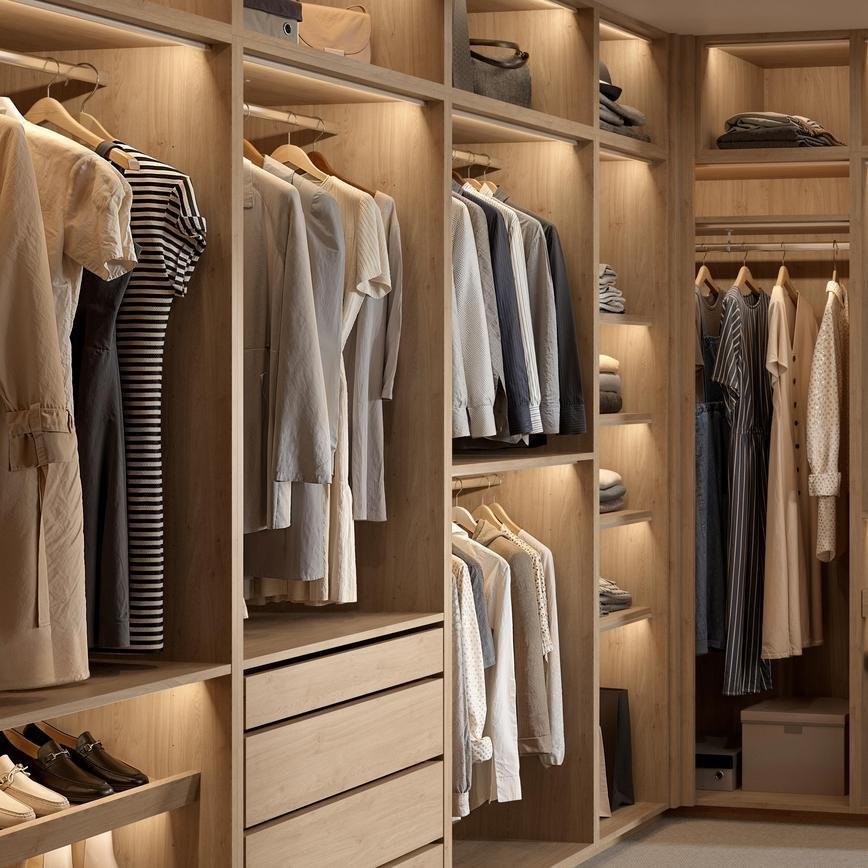
Integrated Joinery Lighting
Integrated joinery lighting, designed into the cabinetry from the beginning.
ZAUS Integrated Joinery Lighting brings functional, ambient and architectural illumination directly into bespoke kitchens, wardrobes, shelving, display cabinetry and custom residential joinery.
Each lighting package can be developed alongside the joinery design, allowing LED profiles, illuminated shelving, internal cabinet lighting, drawer lighting, sensors, controls and electrical provisions to be coordinated with the cabinetry before manufacture.
By considering lighting as part of the joinery itself, profiles and wiring pathways can be incorporated more discreetly, creating cleaner detailing while improving visibility, highlighting displayed objects and introducing controlled ambient illumination throughout the interior.
Integrated Lighting Design
Lighting positions can be developed around the dimensions, materials and intended function of the individual cabinetry.
Depending on the selected manufacturer-supported system, configurations can include:
Integrated linear LED profiles
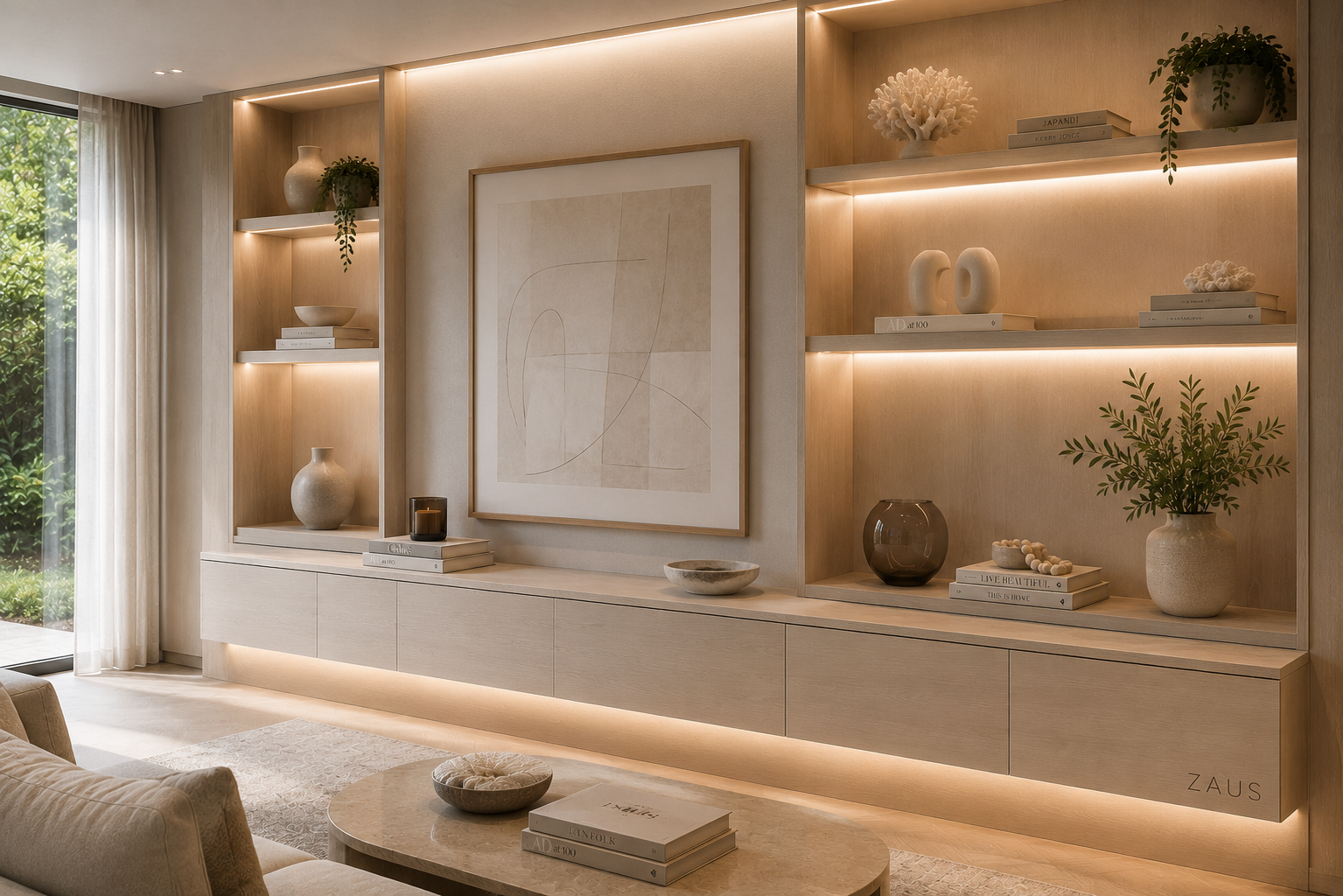
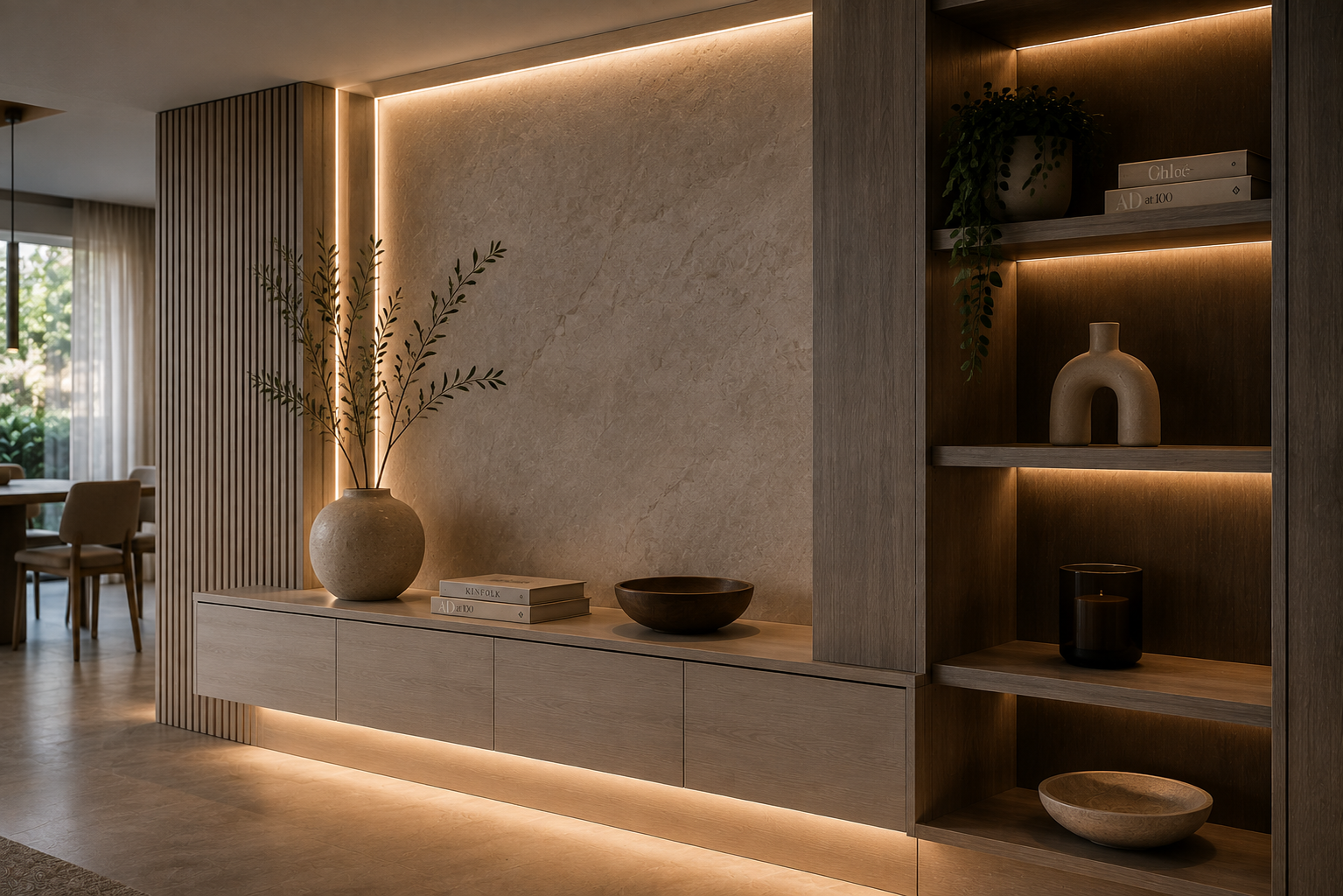
Shelf lighting
Illuminated glass shelving
Under-shelf lighting
Internal cabinet lighting
Display lighting
Drawer lighting
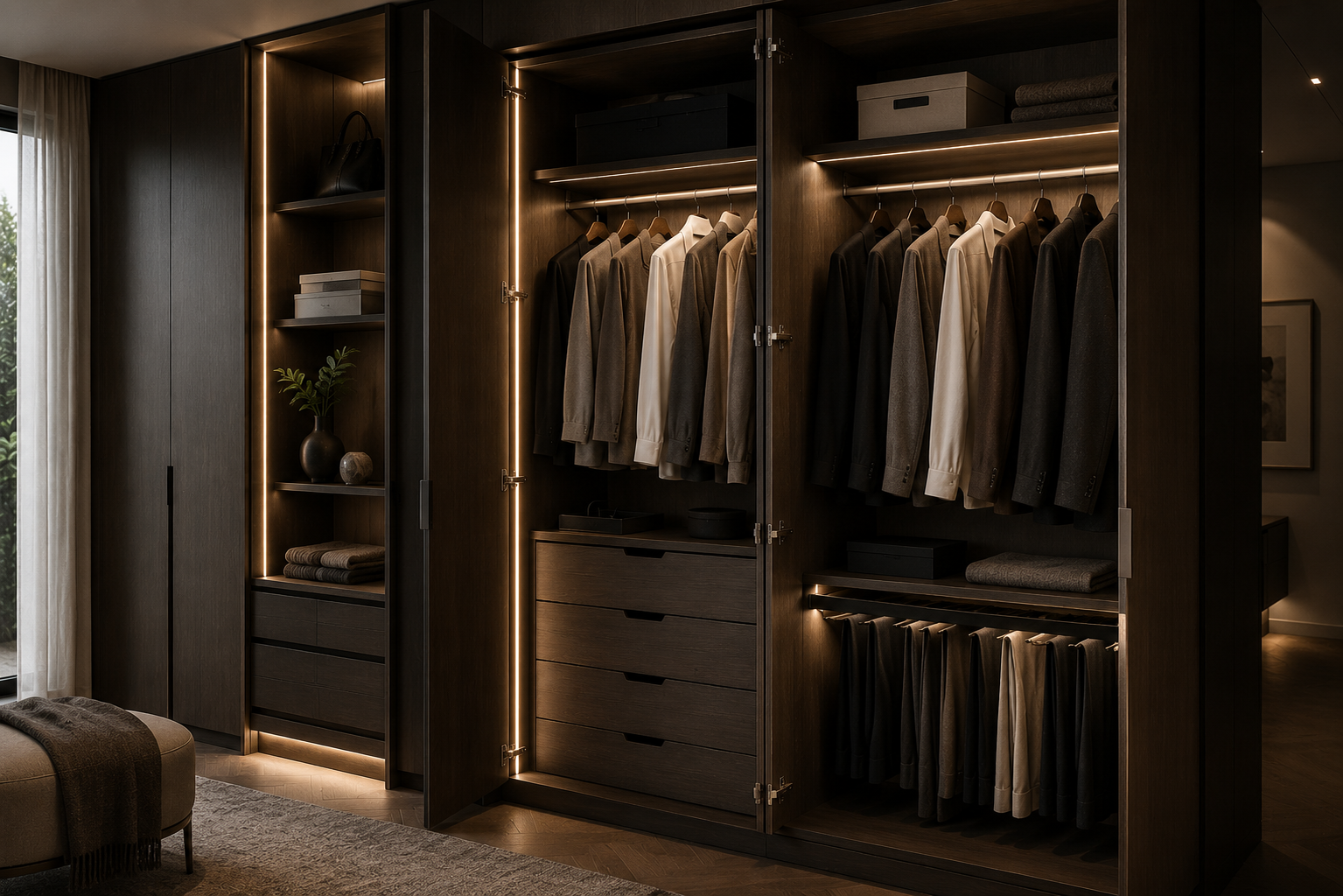
Hanging-area lighting
Cabinet downlighting
Integrated profile lighting
Different lighting applications can be combined within the same joinery package according to the functional and architectural requirements of each area.
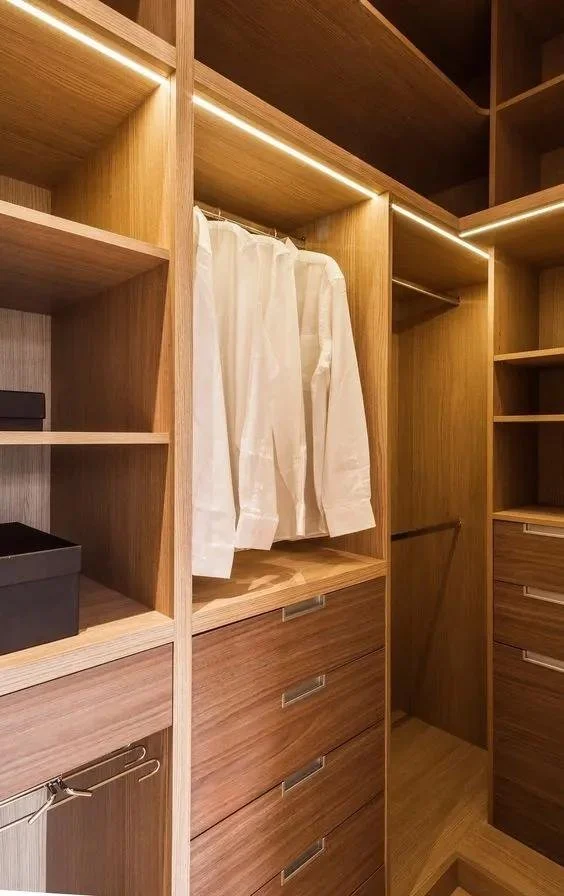
Shelf Lighting
Lighting can be integrated directly into shelving to illuminate the surface below while maintaining a clean architectural appearance.
Applications can include:
Open shelving
Display shelving
Kitchen shelving
Bar cabinetry
Libraries
Wardrobe shelving
Entertainment joinery
Feature cabinetry
LED profiles can be coordinated with the shelf construction during manufacture so the lighting installation becomes part of the joinery detail rather than an externally applied fitting.
Illuminated Glass Shelving
Selected glass shelving applications can incorporate integrated illumination to create a lighter and more refined display effect.
These systems are particularly suited to:
Glass display cabinets
Bars
Collector cabinetry
Kitchen display cabinetry
Dressing rooms
Feature residential joinery
Lighting can emphasise both the displayed objects and the glass itself, creating additional visual depth within the cabinetry.
Final glass, profile and lighting compatibility should be confirmed against the selected manufacturer-supported system.
Display Cabinet Lighting
Display cabinetry can incorporate lighting specifically positioned to illuminate objects, collections and decorative elements.
Depending on the cabinet configuration, lighting can be incorporated into shelves, cabinet sides, upper sections or concealed profiles.
Display lighting can be coordinated with:
Aluminium-framed glass cabinet doors
Glass shelving
Open display niches
Bars and entertaining cabinetry
Libraries
Collector cabinetry
Entertainment joinery
The lighting position can be considered alongside the cabinet dimensions and intended contents to achieve a more controlled result.
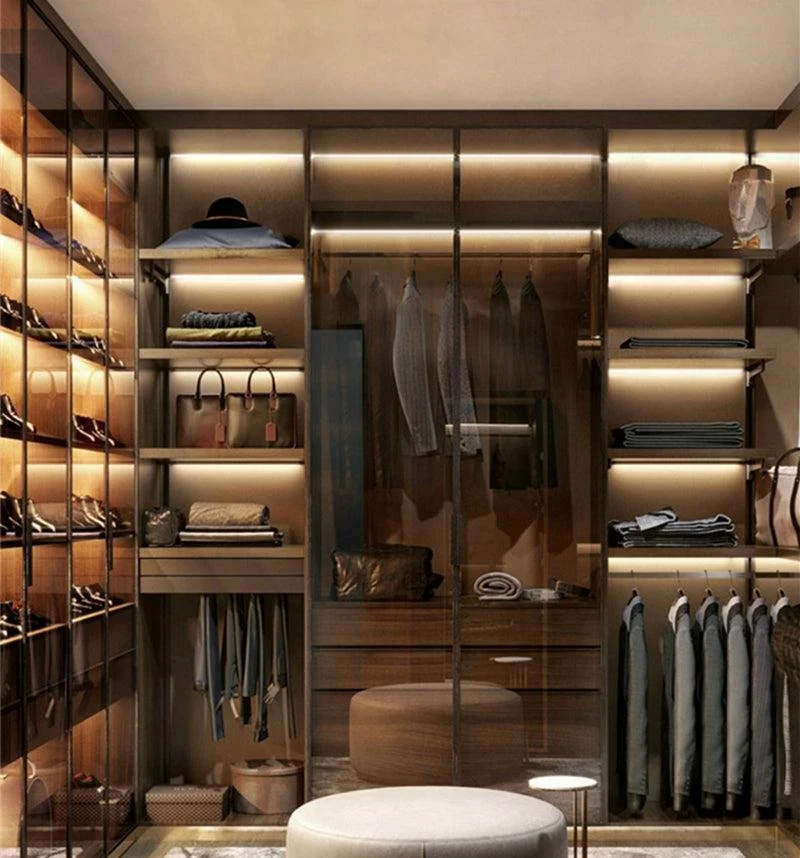
Wardrobe & Dressing Room Lighting
Lighting can be integrated throughout wardrobes and dressing rooms to improve visibility while contributing to the overall architectural presentation of the space.
Applications can include:
Hanging-area lighting
Shelf lighting
Internal wardrobe lighting
Drawer lighting
Shoe display lighting
Accessory storage lighting
Open wardrobe lighting
Integrated linear profiles
Lighting can be coordinated across conventional wardrobe cabinetry as well as Architectural Post Wardrobe Systems and Wall-Mounted Wardrobe Systems.
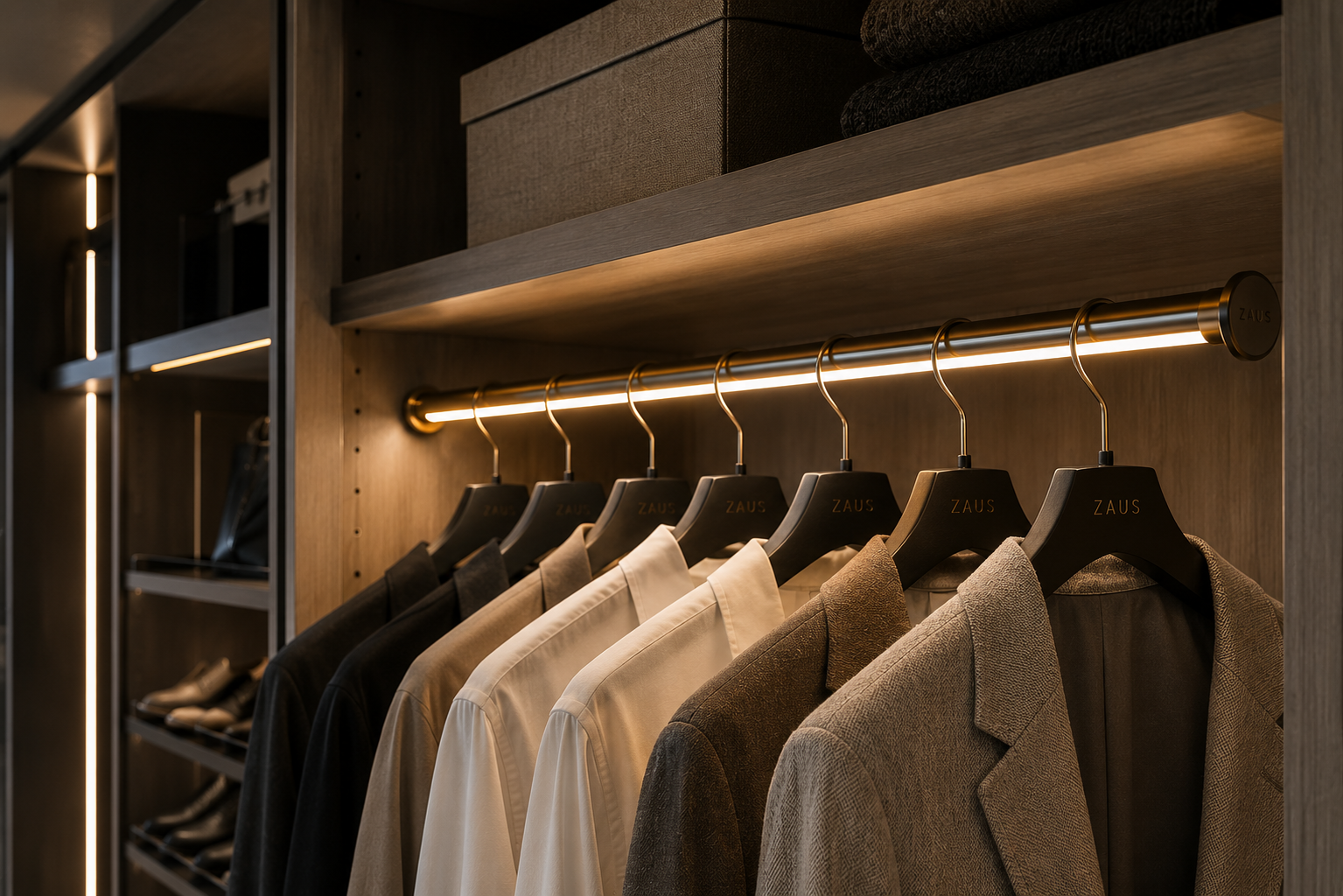
Hanging-Area Lighting
Integrated lighting can be positioned within selected wardrobe hanging zones to provide illumination directly across stored clothing.
Depending on the selected system, lighting can be incorporated into surrounding shelving, cabinetry profiles or compatible wardrobe components.
This can improve visibility within deeper wardrobe areas while reducing reliance on general room lighting alone.
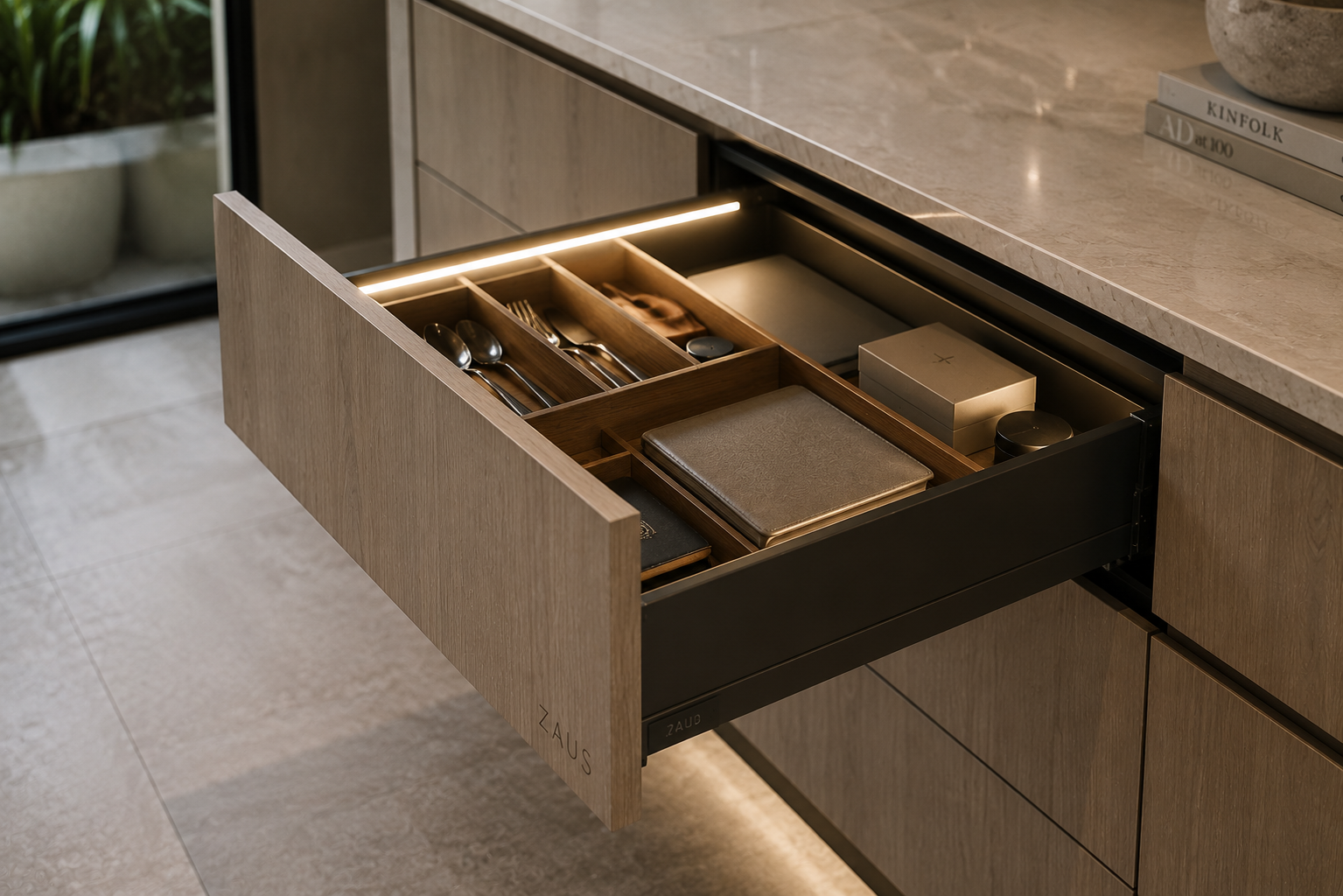
Drawer Lighting
Compatible lighting can be incorporated into selected drawer applications to provide illumination when internal storage is accessed.
Applications can include:
Wardrobe accessory drawers
Jewellery storage
Dressing islands
Display drawers
Kitchen drawers
Selected residential storage
Where compatible controls are available, drawer lighting can be configured to operate automatically when the storage area is accessed.
The lighting position, switching method and wiring requirements should be coordinated with the drawer construction and runner system before manufacture.
Kitchen Joinery Lighting
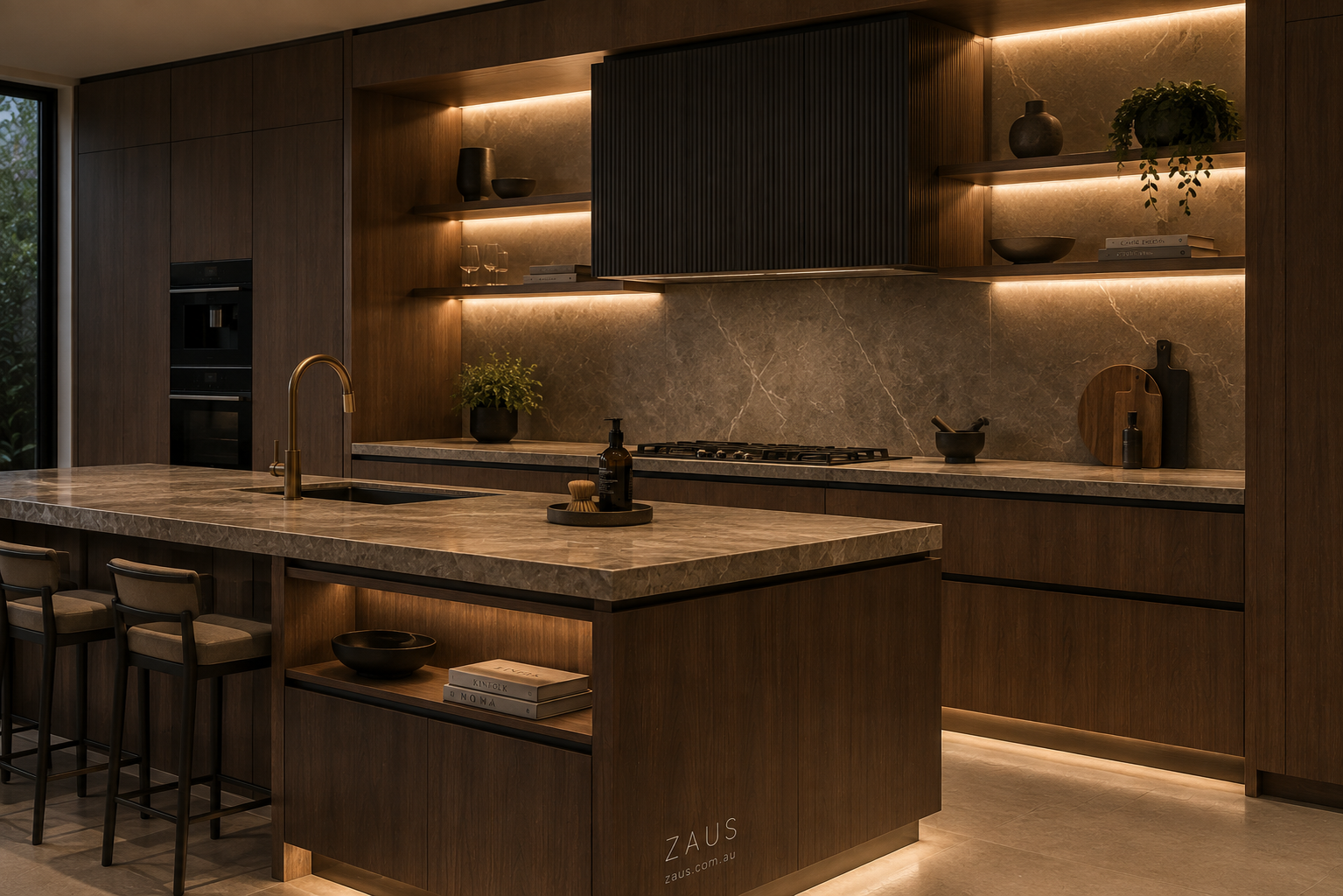
Kitchen cabinetry can incorporate integrated lighting for both practical task illumination and architectural effect.
Applications can include:
Under-cabinet lighting
Open shelf lighting
Internal cabinet lighting
Display cabinetry
Glass-shelf lighting
Drawer lighting
Pantry lighting
Integrated profile lighting
Feature island lighting where applicable
Lighting can be positioned according to preparation areas, cabinetry configuration and surrounding architectural lighting to create a more coordinated kitchen environment.
Under-Cabinet Lighting
Under-cabinet lighting can provide direct illumination across benchtops and preparation areas while keeping the light source visually integrated with the overhead cabinetry.
Profiles can be coordinated with the cabinet construction to reduce visible fittings and maintain cleaner cabinetry lines.
Positioning should consider the cabinet depth, benchtop location, splashback material and required working illumination.
Internal Cabinet Lighting
Lighting can be incorporated inside selected enclosed cabinetry to improve visibility when accessing stored items.
Applications can include:
Pantry cabinetry
Tall storage
Wardrobes
Display cabinets
Bars
Appliance cabinetry
Residential storage
Internal lighting can be particularly effective when combined with compatible door-activated or sensor-based controls.
Bars & Entertainment Joinery
Bars and entertainment cabinetry can combine several integrated lighting applications within the same composition.
Depending on the design, this can include:
Illuminated glass shelves
Bottle display lighting
Under-shelf lighting
Internal cabinet lighting
Display niches
Integrated linear profiles
Feature lighting
Lighting can be coordinated with glass, timber, stone, metal and other joinery finishes to become part of the overall material composition.
Mirror & Bathroom Cabinetry
Selected mirror and bathroom cabinetry can incorporate integrated lighting where supported by the applicable manufacturer system and suitable for the intended environment.
Applications can include:
Integrated mirror lighting
Mirror cabinet lighting
Vanity storage lighting
Internal cabinet lighting
Shelf lighting
Bathroom applications require additional consideration of the electrical specification, installation location and applicable project requirements.
Final lighting and electrical suitability should therefore be confirmed before manufacture.
Integrated LED Profiles
LED profiles allow the light source to be incorporated more discreetly into cabinetry, shelving and architectural joinery.
Depending on the selected system, profiles can be integrated into:
Shelves
Cabinet interiors
Display units
Wardrobe components
Joinery recesses
Selected handle or architectural profiles
Profile dimensions, mounting position and required recesses should be considered during joinery development so the cabinetry can be manufactured around the lighting system.
Integrated Controls
Depending on the selected manufacturer-supported system, joinery lighting can be coordinated with compatible control methods including:
Touch controls
Hand-wave sensor controls
Door-activated switching
Motion-sensing controls
Automatic drawer activation
Different control methods can be used according to the way each area of cabinetry is intended to operate.
For example, internal cabinet lighting can activate when a door is opened, while wardrobe or display lighting may use motion, touch or hand-wave control depending on the selected system.
Sensor-Activated Lighting
Sensor-based control can allow lighting to operate without requiring a conventional visible switch on the cabinetry.
This can be particularly useful within:
Wardrobes
Pantries
Internal cabinets
Drawers
Dressing rooms
Display cabinetry
Sensor type and positioning should be coordinated with the cabinetry layout to ensure the selected control method is appropriate for the intended operation.
Architectural Integration
Integrated joinery lighting is developed as part of the cabinetry detailing rather than as a separate decorative layer.
Lighting profiles can be positioned within shelves, panels, cabinetry and display elements so the light source remains visually restrained while the illumination itself contributes to the architecture.
This approach can help maintain cleaner cabinet lines and reduce the visual presence of conventional surface-mounted fittings.
Coordination with Materials & Finishes
Lighting should be considered alongside the materials surrounding the light source.
Timber, glass, mirror, matt surfaces, gloss finishes and darker cabinetry can each interact differently with integrated illumination.
Lighting positions can therefore be coordinated with:
Decorative cabinet fronts
Timber and veneer
Glass shelving
Aluminium-framed glass doors
Integrated mirror cabinetry
Architectural wall panelling
Open shelving
Display materials
This allows the lighting and material palette to be developed together as part of the overall joinery composition.
Electrical Coordination
Integrated lighting requires electrical provisions to be considered during the joinery development process.
Depending on the selected system, coordination can include:
Power requirements
Drivers and compatible components
Wiring pathways
Switching
Sensor locations
Cable access
Maintenance access
Connection points
Planning these requirements before manufacture allows wiring and compatible components to be incorporated more discreetly within the cabinetry.
Final electrical connections and installation should be completed in accordance with the project requirements and by the relevant licensed trades.
Whole-of-Project Joinery Coordination
Integrated Joinery Lighting can be coordinated throughout the broader ZAUS bespoke joinery collection.
Custom Kitchen Joinery • Wardrobes & Dressing Rooms • Bathroom Vanities • Custom Residential Joinery • Aluminium-Framed Glass Cabinet Doors • Integrated Mirror Cabinet Doors • Architectural Wall Panelling • Architectural Post Wardrobe Systems • Wall-Mounted Wardrobe Systems
Where lighting is used across multiple areas, profiles, lighting applications and control methods can be coordinated to establish a more consistent approach throughout the project.
Project Development & Coordination
ZAUS develops integrated joinery lighting alongside the individual cabinetry package.
The process can incorporate:
Review Joinery Design • Define Lighting Applications • Determine Lighting Positions • Select Compatible Profiles • Coordinate Cabinet Construction • Select Control Methods • Resolve Wiring Pathways • Confirm Electrical Requirements • Finalise Shop Drawings • Manufacture • Deliver • Coordinate Installation
Final lighting components, profiles, positions, control methods and electrical requirements are confirmed against the applicable manufacturer-supported system and project specification before production.
Applications
Kitchen Joinery • Wardrobes & Dressing Rooms • Dressing Islands • Bathroom & Mirror Cabinetry • Glass Display Cabinets • Bars • Libraries • Shelving • Entertainment Joinery • Architectural Wardrobe Systems • Architectural Wall Panelling • Custom Residential Joinery • Custom Homes • Luxury Residences • Apartments • Boutique Residential Projects
Integrated. Functional. Architectural Illumination.
ZAUS coordinates joinery lighting as an integral part of the complete cabinetry package rather than treating illumination as an addition after the joinery has been manufactured.
Define the Joinery • Identify Lighting Requirements • Position the Light • Select Profiles • Select Controls • Coordinate Electrical Provisions • Integrate with Cabinetry • Manufacture & Deliver
The result is a coordinated lighting system developed around the cabinetry, materials, functionality and architectural intent of the individual space.
Integrated joinery lighting, designed into the cabinetry from the beginning.
ZAUS Integrated Joinery Lighting brings functional, ambient and architectural illumination directly into bespoke kitchens, wardrobes, shelving, display cabinetry and custom residential joinery.
Each lighting package can be developed alongside the joinery design, allowing LED profiles, illuminated shelving, internal cabinet lighting, drawer lighting, sensors, controls and electrical provisions to be coordinated with the cabinetry before manufacture.
By considering lighting as part of the joinery itself, profiles and wiring pathways can be incorporated more discreetly, creating cleaner detailing while improving visibility, highlighting displayed objects and introducing controlled ambient illumination throughout the interior.
Integrated Lighting Design
Lighting positions can be developed around the dimensions, materials and intended function of the individual cabinetry.
Depending on the selected manufacturer-supported system, configurations can include:
Integrated linear LED profiles
Shelf lighting
Illuminated glass shelving
Under-shelf lighting
Internal cabinet lighting
Display lighting
Drawer lighting
Hanging-area lighting
Cabinet downlighting
Integrated profile lighting
Different lighting applications can be combined within the same joinery package according to the functional and architectural requirements of each area.
Shelf Lighting
Lighting can be integrated directly into shelving to illuminate the surface below while maintaining a clean architectural appearance.
Applications can include:
Open shelving
Display shelving
Kitchen shelving
Bar cabinetry
Libraries
Wardrobe shelving
Entertainment joinery
Feature cabinetry
LED profiles can be coordinated with the shelf construction during manufacture so the lighting installation becomes part of the joinery detail rather than an externally applied fitting.
Illuminated Glass Shelving
Selected glass shelving applications can incorporate integrated illumination to create a lighter and more refined display effect.
These systems are particularly suited to:
Glass display cabinets
Bars
Collector cabinetry
Kitchen display cabinetry
Dressing rooms
Feature residential joinery
Lighting can emphasise both the displayed objects and the glass itself, creating additional visual depth within the cabinetry.
Final glass, profile and lighting compatibility should be confirmed against the selected manufacturer-supported system.
Display Cabinet Lighting
Display cabinetry can incorporate lighting specifically positioned to illuminate objects, collections and decorative elements.
Depending on the cabinet configuration, lighting can be incorporated into shelves, cabinet sides, upper sections or concealed profiles.
Display lighting can be coordinated with:
Aluminium-framed glass cabinet doors
Glass shelving
Open display niches
Bars and entertaining cabinetry
Libraries
Collector cabinetry
Entertainment joinery
The lighting position can be considered alongside the cabinet dimensions and intended contents to achieve a more controlled result.
Wardrobe & Dressing Room Lighting
Lighting can be integrated throughout wardrobes and dressing rooms to improve visibility while contributing to the overall architectural presentation of the space.
Applications can include:
Hanging-area lighting
Shelf lighting
Internal wardrobe lighting
Drawer lighting
Shoe display lighting
Accessory storage lighting
Open wardrobe lighting
Integrated linear profiles
Lighting can be coordinated across conventional wardrobe cabinetry as well as Architectural Post Wardrobe Systems and Wall-Mounted Wardrobe Systems.
Hanging-Area Lighting
Integrated lighting can be positioned within selected wardrobe hanging zones to provide illumination directly across stored clothing.
Depending on the selected system, lighting can be incorporated into surrounding shelving, cabinetry profiles or compatible wardrobe components.
This can improve visibility within deeper wardrobe areas while reducing reliance on general room lighting alone.
Drawer Lighting
Compatible lighting can be incorporated into selected drawer applications to provide illumination when internal storage is accessed.
Applications can include:
Wardrobe accessory drawers
Jewellery storage
Dressing islands
Display drawers
Kitchen drawers
Selected residential storage
Where compatible controls are available, drawer lighting can be configured to operate automatically when the storage area is accessed.
The lighting position, switching method and wiring requirements should be coordinated with the drawer construction and runner system before manufacture.
Kitchen Joinery Lighting
Kitchen cabinetry can incorporate integrated lighting for both practical task illumination and architectural effect.
Applications can include:
Under-cabinet lighting
Open shelf lighting
Internal cabinet lighting
Display cabinetry
Glass-shelf lighting
Drawer lighting
Pantry lighting
Integrated profile lighting
Feature island lighting where applicable
Lighting can be positioned according to preparation areas, cabinetry configuration and surrounding architectural lighting to create a more coordinated kitchen environment.
Under-Cabinet Lighting
Under-cabinet lighting can provide direct illumination across benchtops and preparation areas while keeping the light source visually integrated with the overhead cabinetry.
Profiles can be coordinated with the cabinet construction to reduce visible fittings and maintain cleaner cabinetry lines.
Positioning should consider the cabinet depth, benchtop location, splashback material and required working illumination.
Internal Cabinet Lighting
Lighting can be incorporated inside selected enclosed cabinetry to improve visibility when accessing stored items.
Applications can include:
Pantry cabinetry
Tall storage
Wardrobes
Display cabinets
Bars
Appliance cabinetry
Residential storage
Internal lighting can be particularly effective when combined with compatible door-activated or sensor-based controls.
Bars & Entertainment Joinery
Bars and entertainment cabinetry can combine several integrated lighting applications within the same composition.
Depending on the design, this can include:
Illuminated glass shelves
Bottle display lighting
Under-shelf lighting
Internal cabinet lighting
Display niches
Integrated linear profiles
Feature lighting
Lighting can be coordinated with glass, timber, stone, metal and other joinery finishes to become part of the overall material composition.
Mirror & Bathroom Cabinetry
Selected mirror and bathroom cabinetry can incorporate integrated lighting where supported by the applicable manufacturer system and suitable for the intended environment.
Applications can include:
Integrated mirror lighting
Mirror cabinet lighting
Vanity storage lighting
Internal cabinet lighting
Shelf lighting
Bathroom applications require additional consideration of the electrical specification, installation location and applicable project requirements.
Final lighting and electrical suitability should therefore be confirmed before manufacture.
Integrated LED Profiles
LED profiles allow the light source to be incorporated more discreetly into cabinetry, shelving and architectural joinery.
Depending on the selected system, profiles can be integrated into:
Shelves
Cabinet interiors
Display units
Wardrobe components
Joinery recesses
Selected handle or architectural profiles
Profile dimensions, mounting position and required recesses should be considered during joinery development so the cabinetry can be manufactured around the lighting system.
Integrated Controls
Depending on the selected manufacturer-supported system, joinery lighting can be coordinated with compatible control methods including:
Touch controls
Hand-wave sensor controls
Door-activated switching
Motion-sensing controls
Automatic drawer activation
Different control methods can be used according to the way each area of cabinetry is intended to operate.
For example, internal cabinet lighting can activate when a door is opened, while wardrobe or display lighting may use motion, touch or hand-wave control depending on the selected system.
Sensor-Activated Lighting
Sensor-based control can allow lighting to operate without requiring a conventional visible switch on the cabinetry.
This can be particularly useful within:
Wardrobes
Pantries
Internal cabinets
Drawers
Dressing rooms
Display cabinetry
Sensor type and positioning should be coordinated with the cabinetry layout to ensure the selected control method is appropriate for the intended operation.
Architectural Integration
Integrated joinery lighting is developed as part of the cabinetry detailing rather than as a separate decorative layer.
Lighting profiles can be positioned within shelves, panels, cabinetry and display elements so the light source remains visually restrained while the illumination itself contributes to the architecture.
This approach can help maintain cleaner cabinet lines and reduce the visual presence of conventional surface-mounted fittings.
Coordination with Materials & Finishes
Lighting should be considered alongside the materials surrounding the light source.
Timber, glass, mirror, matt surfaces, gloss finishes and darker cabinetry can each interact differently with integrated illumination.
Lighting positions can therefore be coordinated with:
Decorative cabinet fronts
Timber and veneer
Glass shelving
Aluminium-framed glass doors
Integrated mirror cabinetry
Architectural wall panelling
Open shelving
Display materials
This allows the lighting and material palette to be developed together as part of the overall joinery composition.
Electrical Coordination
Integrated lighting requires electrical provisions to be considered during the joinery development process.
Depending on the selected system, coordination can include:
Power requirements
Drivers and compatible components
Wiring pathways
Switching
Sensor locations
Cable access
Maintenance access
Connection points
Planning these requirements before manufacture allows wiring and compatible components to be incorporated more discreetly within the cabinetry.
Final electrical connections and installation should be completed in accordance with the project requirements and by the relevant licensed trades.
Whole-of-Project Joinery Coordination
Integrated Joinery Lighting can be coordinated throughout the broader ZAUS bespoke joinery collection.
Custom Kitchen Joinery • Wardrobes & Dressing Rooms • Bathroom Vanities • Custom Residential Joinery • Aluminium-Framed Glass Cabinet Doors • Integrated Mirror Cabinet Doors • Architectural Wall Panelling • Architectural Post Wardrobe Systems • Wall-Mounted Wardrobe Systems
Where lighting is used across multiple areas, profiles, lighting applications and control methods can be coordinated to establish a more consistent approach throughout the project.
Project Development & Coordination
ZAUS develops integrated joinery lighting alongside the individual cabinetry package.
The process can incorporate:
Review Joinery Design • Define Lighting Applications • Determine Lighting Positions • Select Compatible Profiles • Coordinate Cabinet Construction • Select Control Methods • Resolve Wiring Pathways • Confirm Electrical Requirements • Finalise Shop Drawings • Manufacture • Deliver • Coordinate Installation
Final lighting components, profiles, positions, control methods and electrical requirements are confirmed against the applicable manufacturer-supported system and project specification before production.
Applications
Kitchen Joinery • Wardrobes & Dressing Rooms • Dressing Islands • Bathroom & Mirror Cabinetry • Glass Display Cabinets • Bars • Libraries • Shelving • Entertainment Joinery • Architectural Wardrobe Systems • Architectural Wall Panelling • Custom Residential Joinery • Custom Homes • Luxury Residences • Apartments • Boutique Residential Projects
Integrated. Functional. Architectural Illumination.
ZAUS coordinates joinery lighting as an integral part of the complete cabinetry package rather than treating illumination as an addition after the joinery has been manufactured.
Define the Joinery • Identify Lighting Requirements • Position the Light • Select Profiles • Select Controls • Coordinate Electrical Provisions • Integrate with Cabinetry • Manufacture & Deliver
The result is a coordinated lighting system developed around the cabinetry, materials, functionality and architectural intent of the individual space.