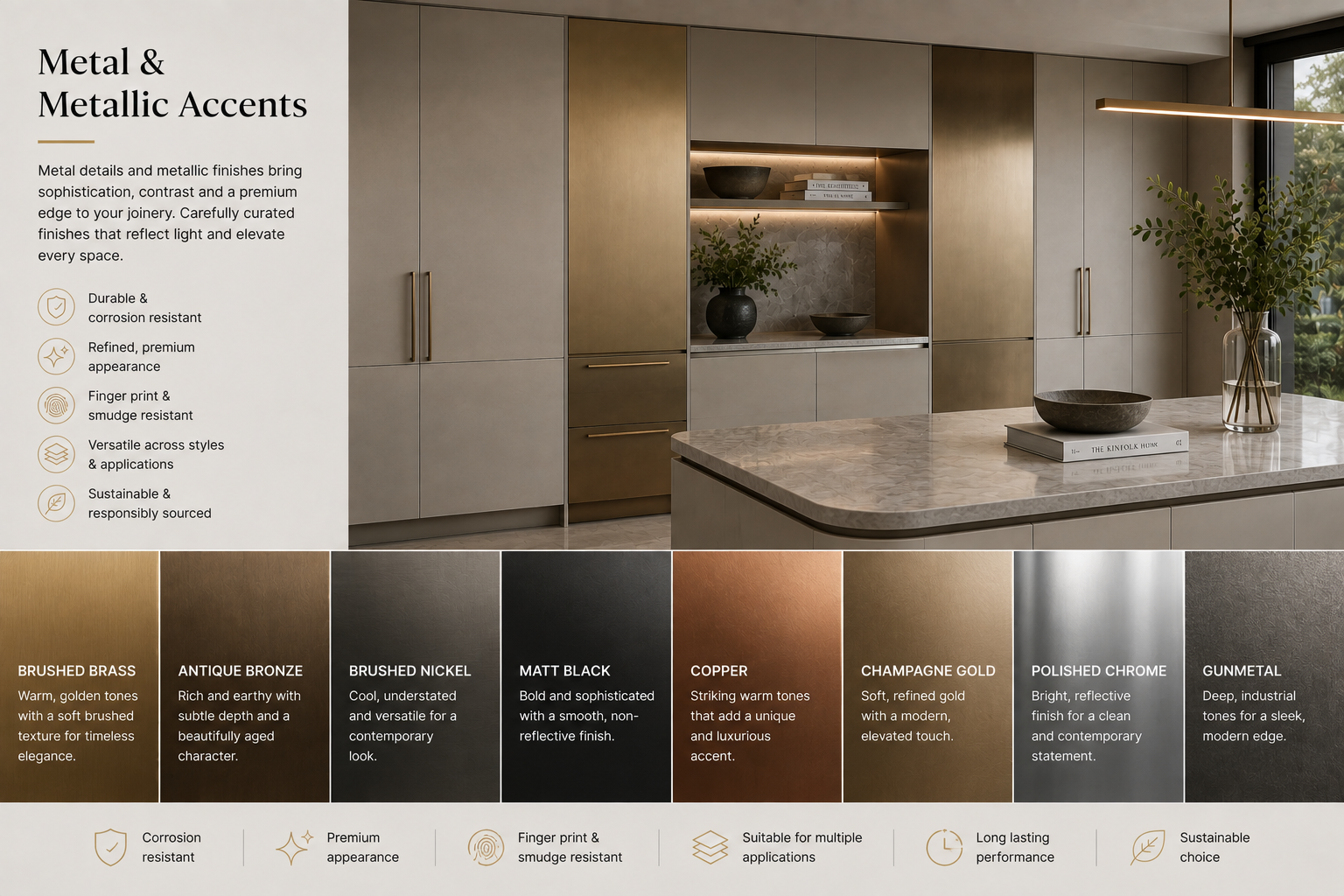
Cabinet Fronts & Finishes
A considered palette of cabinet fronts and finishes, developed around the material language of each project.
ZAUS Custom Cabinet Fronts & Finishes provides a coordinated selection of decorative surfaces, door styles and architectural detailing for bespoke kitchens, wardrobes, bathroom vanities and custom residential joinery.
Each finish package can be developed alongside the broader joinery design, allowing cabinet fronts, end panels, feature elements, profiles, handles and surrounding materials to be considered as one complete composition.
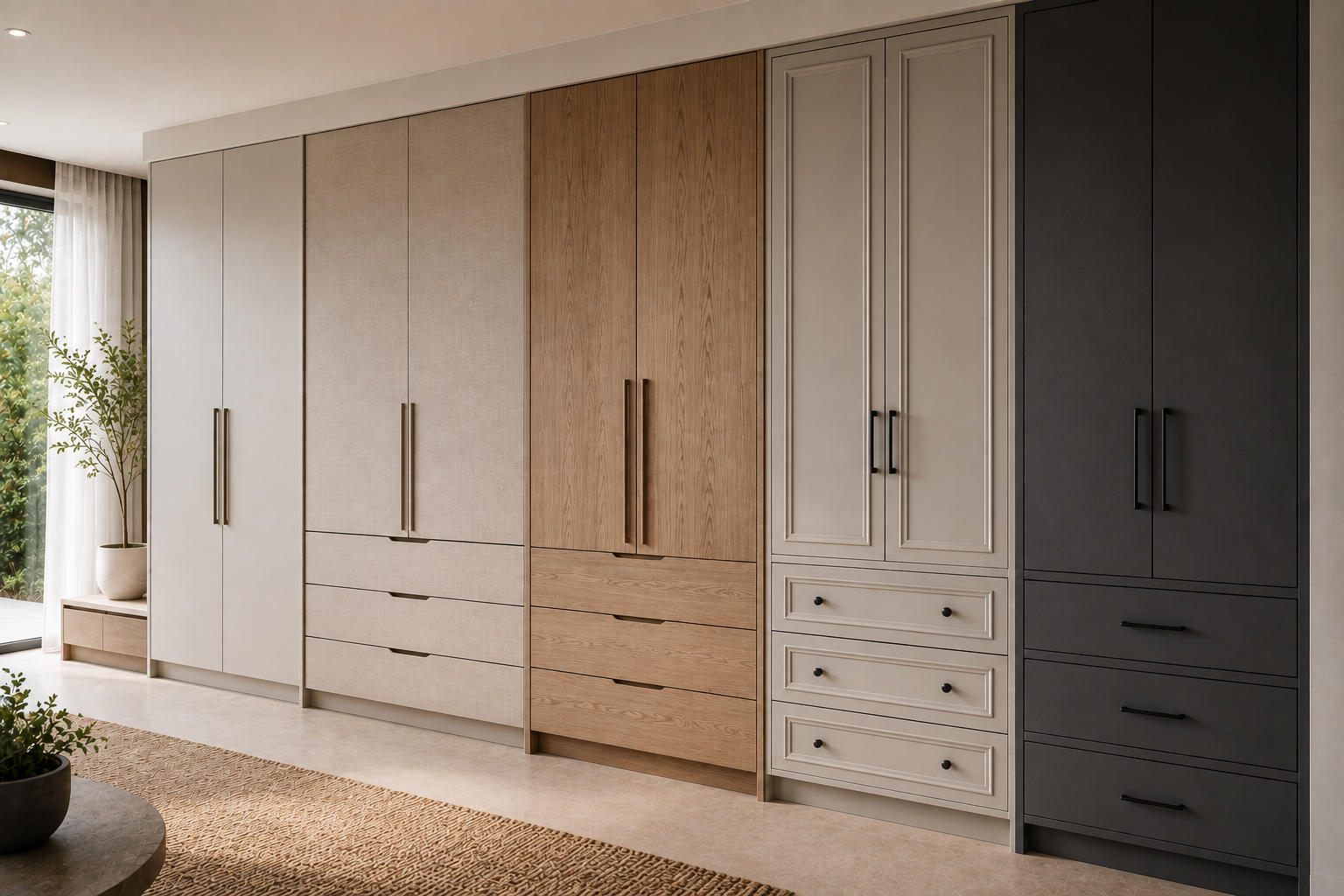
From understated matt surfaces and natural timber expressions through to profiled painted doors, high-gloss finishes and contrasting feature fronts, different materials and surface treatments can be combined according to the architectural character, performance requirements and budget of the individual project.
Double-Faced Decorative Cabinet Fronts
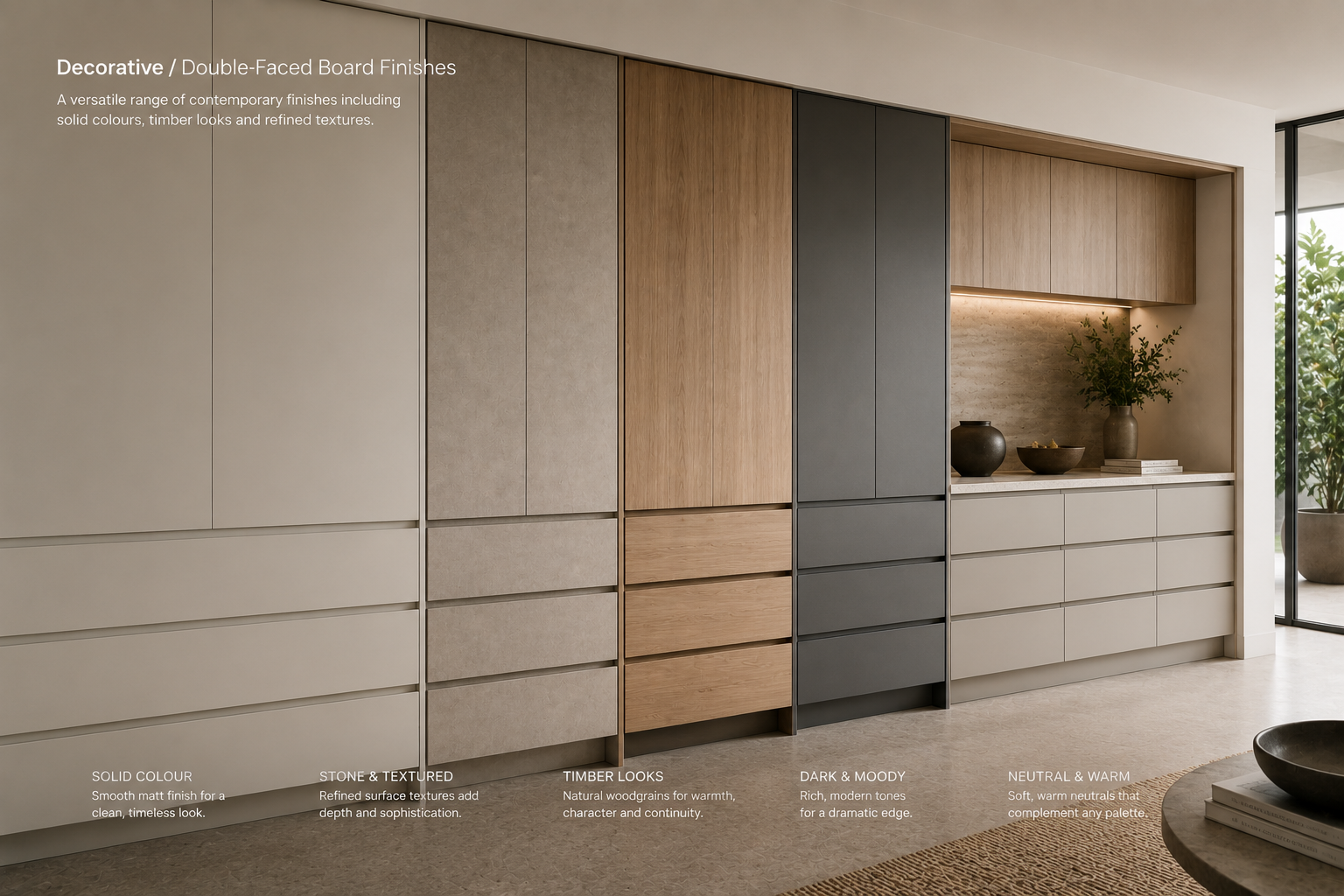
Double-faced decorative board provides a versatile cabinet-front solution across a broad range of contemporary joinery applications.
Depending on the selected manufacturer-supported collection, finishes can include:
Solid colours
Architectural whites
Warm and cool neutrals
Grey and darker tones
Timber-look surfaces
Stone-inspired surfaces
Textured decorative finishes
These materials can be used across cabinet doors, drawer fronts, end panels and coordinated joinery elements to establish a consistent material language throughout the cabinetry.
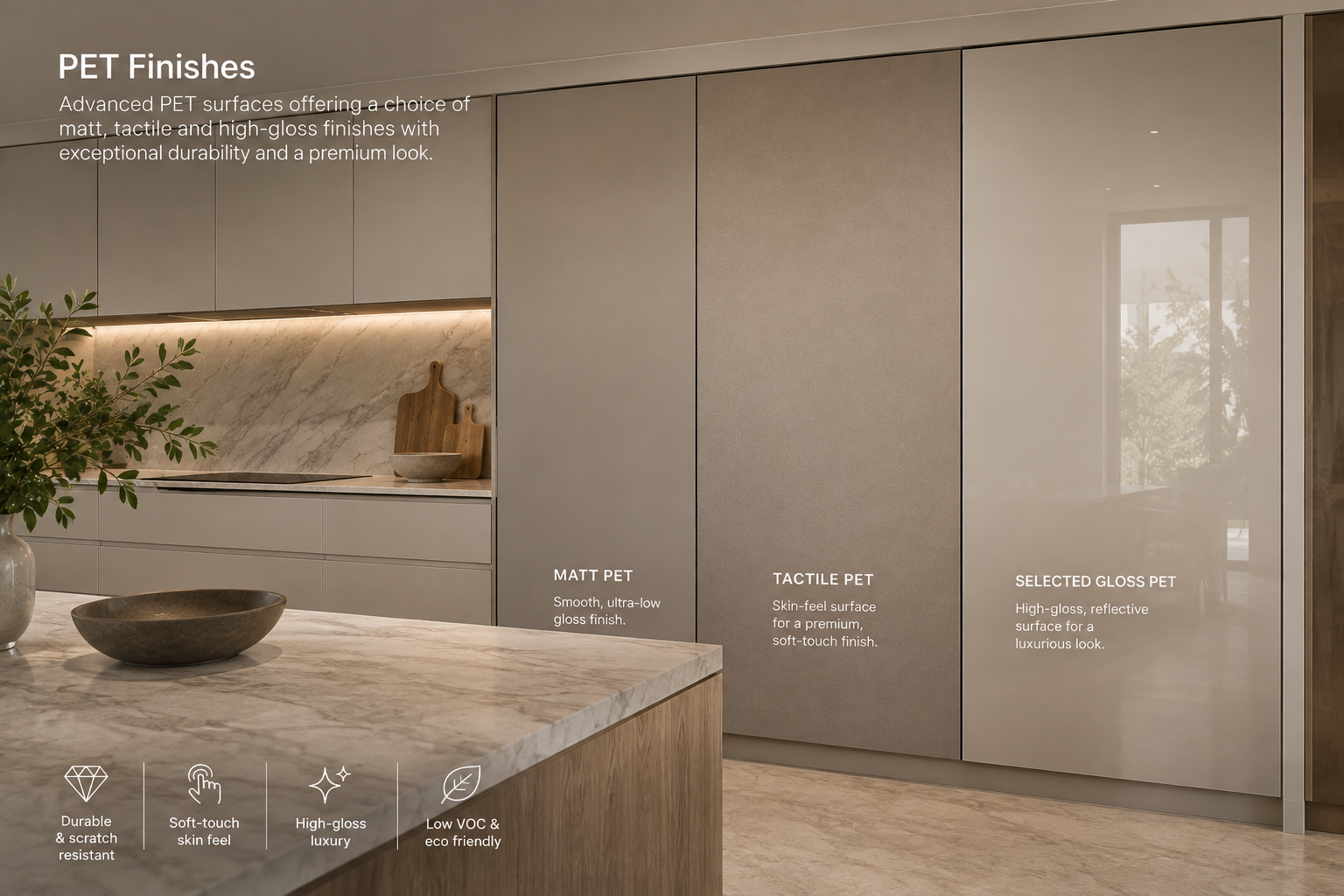
PET Cabinet Fronts
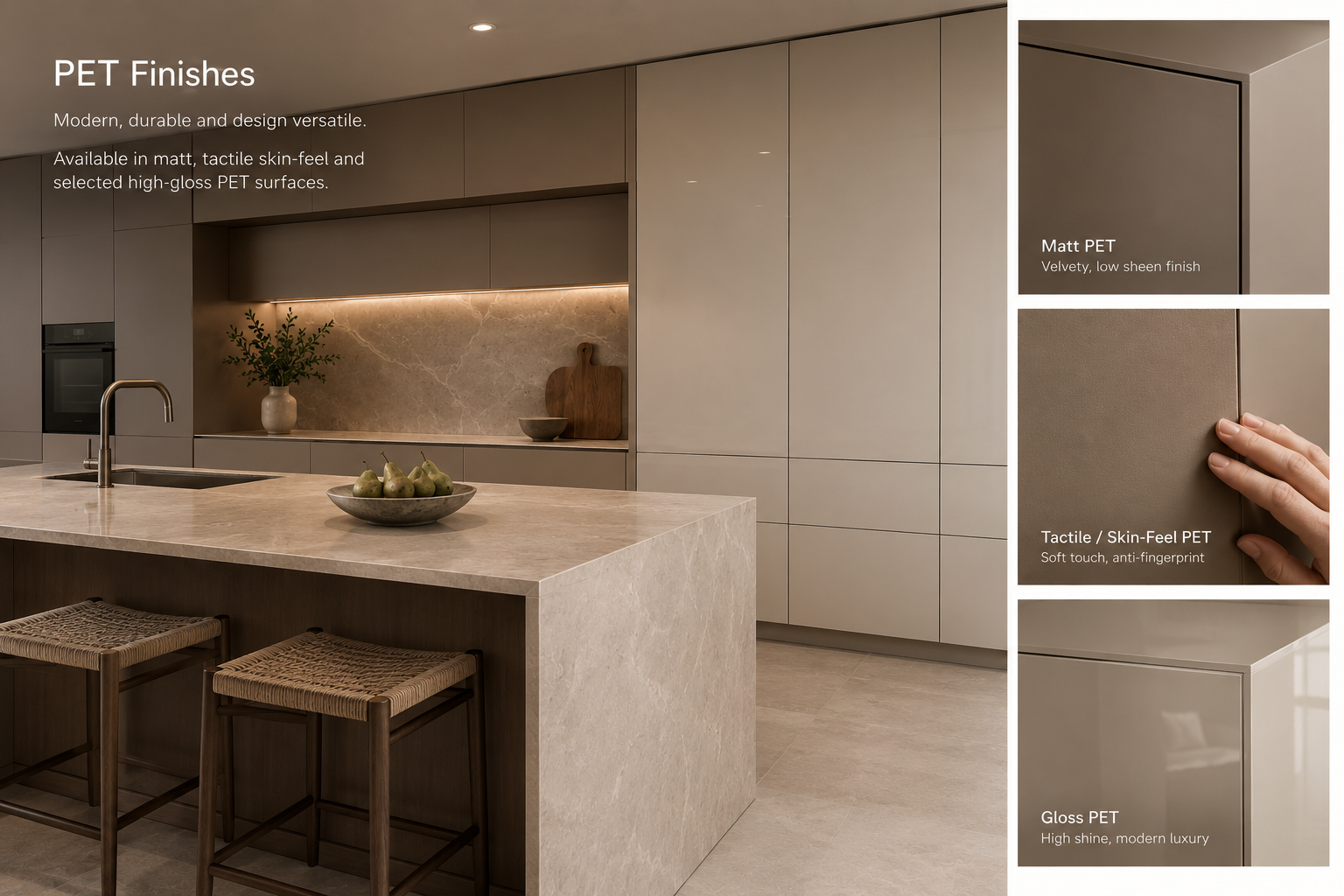
PET surfaces provide a refined contemporary finish particularly suited to clean, streamlined cabinetry.
Depending on the selected manufacturer-supported range, options can include:
Matt finishes
Skin-feel matt surfaces
Selected high-gloss finishes
Solid colours
Neutral tones
Selected decorative surfaces
Timber-inspired finishes
PET fronts can be coordinated with integrated handle details, handleless profiles or architectural handles according to the cabinetry design.
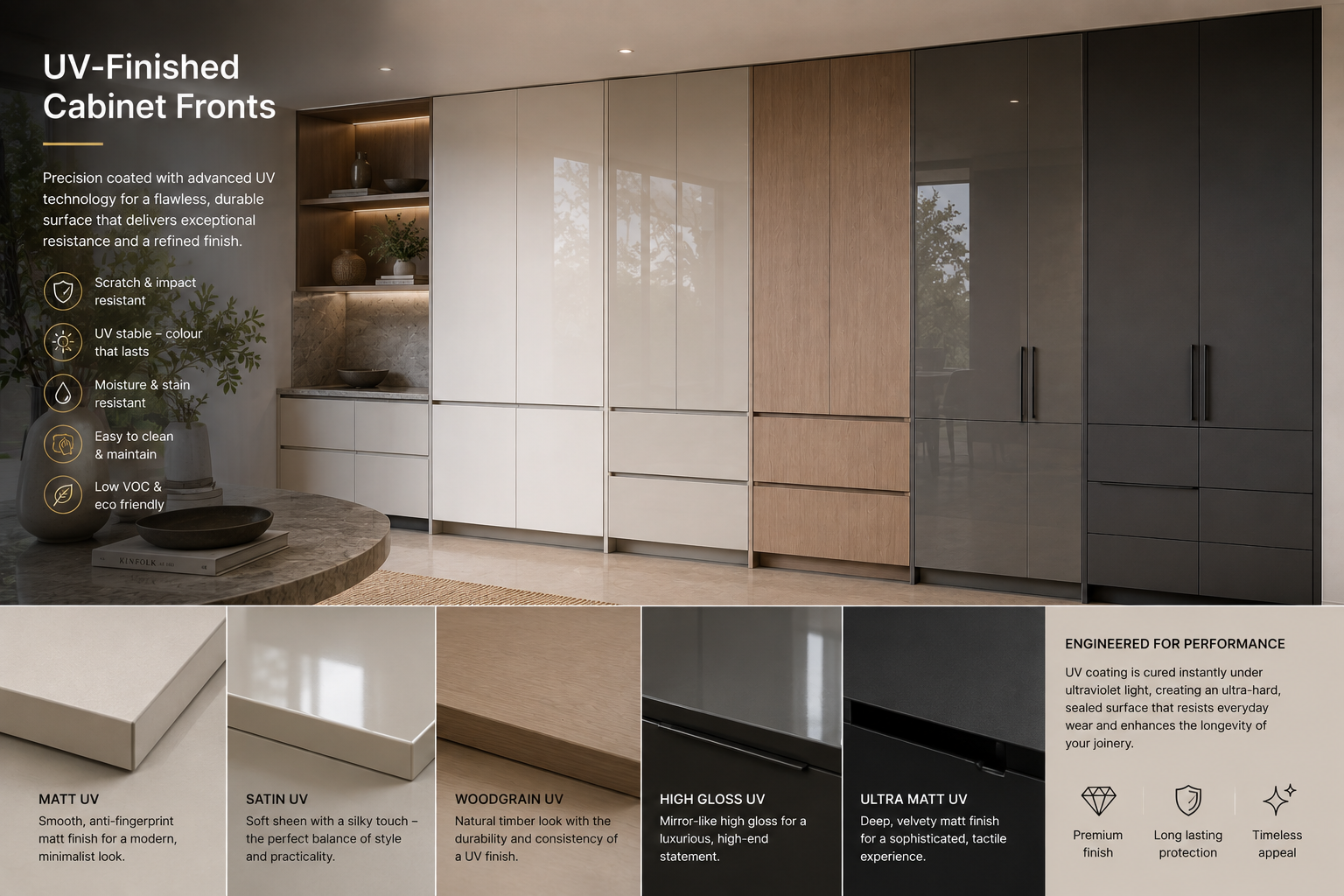
UV-Finished Cabinet Fronts
UV-finished cabinet fronts provide another contemporary surface option for kitchens, wardrobes and custom residential cabinetry.
The manufacturer-supported collection includes selected tactile, decorative and high-gloss surface treatments, allowing the finish to be selected according to the desired visual character of the joinery.
UV fronts can be used across complete cabinetry compositions or introduced selectively alongside other materials to create contrasting feature elements.
Vacuum-Formed Cabinet Fronts
Vacuum-formed fronts provide greater freedom in door shape, edge treatment and surface detailing than conventional flat decorative board.
Depending on the selected manufacturer-supported range, configurations can include:
Flat fronts
Minimally detailed fronts
Routed designs
Profiled doors
Shaker-inspired profiles
Contemporary linear detailing
Solid-colour surfaces
Timber-look finishes
Textured decorative finishes
This allows cabinetry to move beyond completely flat contemporary fronts while remaining part of the same coordinated custom joinery package.
Profiled Cabinet Doors
Profiled cabinet fronts can introduce depth, shadow and architectural detailing to the cabinetry elevation.
Depending on the design direction, profiles can range from restrained linear detailing through to more pronounced routed and framed door styles.
These fronts can be particularly suited to:
Feature kitchens
Kitchen islands
Wardrobes
Bathroom vanities
Bars
Entertainment cabinetry
Residential built-ins
Profile scale, door proportions and surrounding cabinetry should be considered together to maintain a balanced overall composition.
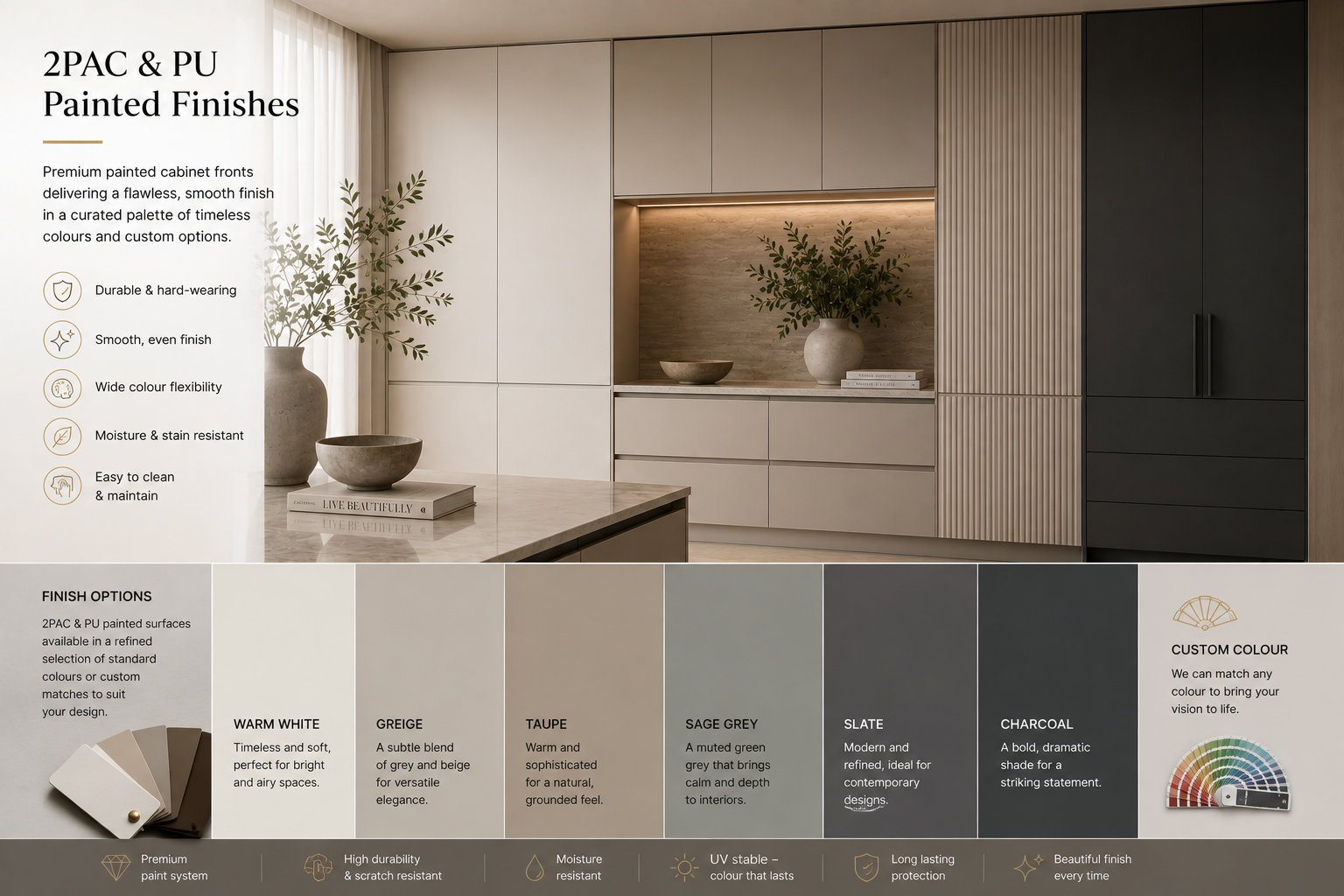
Painted Cabinet Fronts
Painted cabinetry provides greater flexibility where a refined solid-colour finish or more detailed profiled door design is required.
Painted fronts can be incorporated across:
Flat-panel cabinetry
Profiled cabinet doors
Shaker-inspired fronts
Feature cabinetry
Kitchen islands
Wardrobes
Bathroom vanities
Residential joinery
Painted finishes can be used throughout an entire joinery package or selectively alongside timber, decorative board and other surfaces to create material contrast.
Final colours, sheen levels and applicable door profiles should be selected from the supported manufacturer finish range.
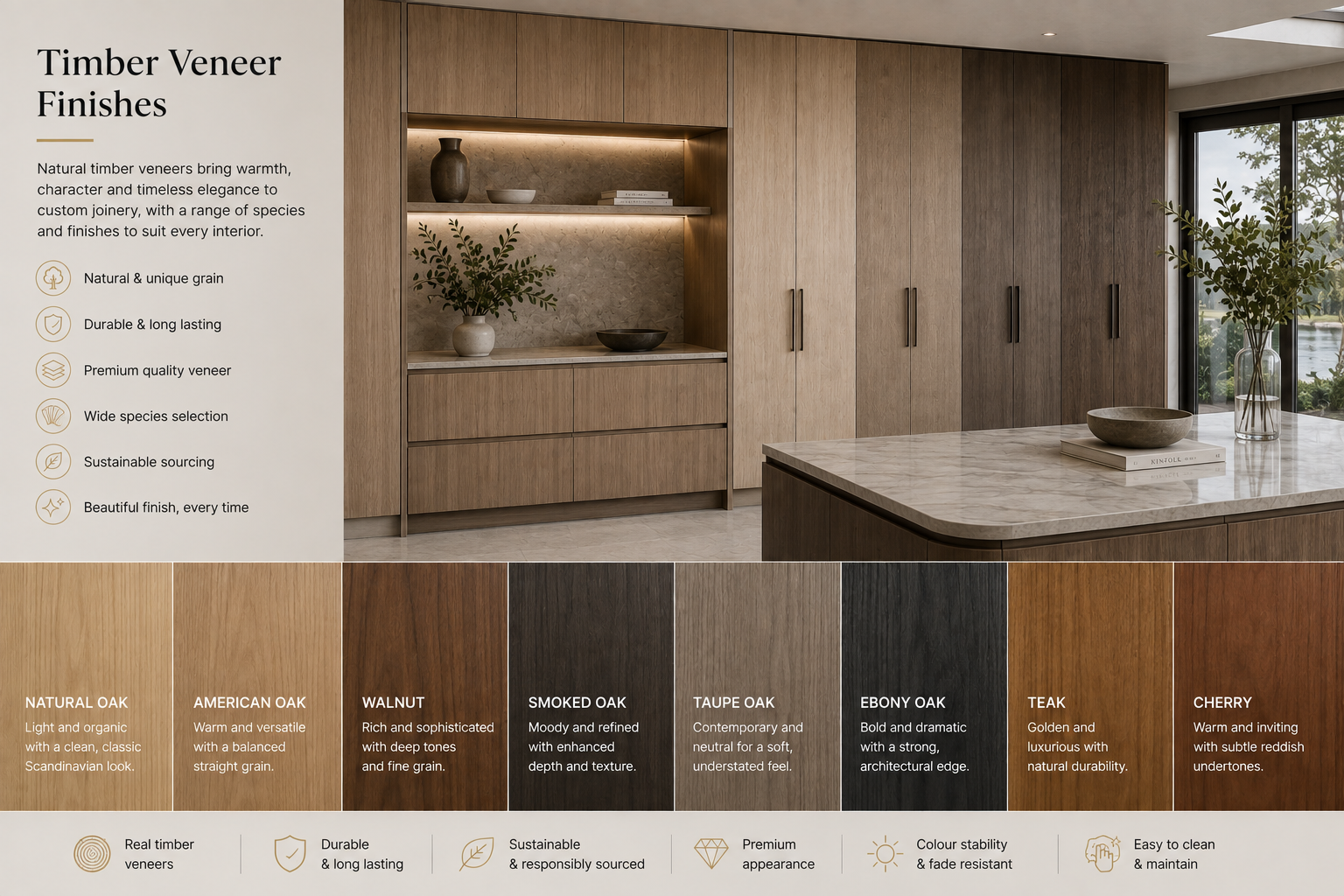
Timber & Veneer Cabinet Fronts
Natural timber veneer and selected timber options provide a warmer and more natural material expression for premium architectural applications.
Timber and veneer can be incorporated across complete cabinetry compositions or introduced selectively as feature elements alongside painted and decorative surfaces.
Applications can include:
Kitchen cabinetry
Kitchen islands
Wardrobes and dressing rooms
Bathroom joinery where suitable
Entertainment cabinetry
Bars
Display cabinetry
Architectural built-ins
Natural grain, tone and visual character can vary between individual pieces, forming part of the inherent material expression of timber and veneer.
Timber-Look Finishes
Where the appearance of timber is desired without specifying natural timber or veneer, selected decorative surface collections can provide timber-look alternatives.
These finishes can introduce grain, texture and warmth while maintaining the consistency of a manufactured decorative surface.
Depending on the selected collection, timber-look finishes can be coordinated across cabinet fronts, internal cabinetry, end panels and other joinery elements.
Matt & Tactile Surfaces
Matt and tactile finishes can provide a softer visual expression than conventional gloss cabinetry.
Depending on the selected material family, these surfaces can include smooth matt, low-sheen and skin-feel finishes across architectural neutrals, darker colours and selected decorative expressions.
Matt finishes can be particularly effective within larger cabinetry compositions where a restrained surface character is preferred.
Gloss Finishes
Selected PET, UV and other manufacturer-supported surface systems can provide higher-gloss cabinet-front options.
Gloss surfaces can introduce greater reflection and visual depth and may be used across complete cabinetry elevations or selectively as feature elements.
The appropriate finish should be considered alongside lighting, surrounding materials and the intended architectural character of the space.
Cabinet Front Profiles & Detailing
Cabinet fronts can be coordinated with different architectural detailing approaches according to the selected material and door system.
Configurations can include:
Flush flat-panel cabinetry
Integrated finger-pull details
Handleless profiles
Shadow-line detailing
Routed doors
Profiled fronts
Framed and Shaker-inspired designs
Architectural handles and pulls
Coordinated end panels
Feature panels
This allows the cabinetry to respond to different architectural styles without being restricted to a single visual language.
Handleless Cabinetry
Selected cabinet-front systems can be coordinated with integrated profiles and opening methods to create clean handleless elevations.
Depending on the cabinetry design, this can include finger-pull details, recessed profiles, push-to-open hardware or other compatible opening arrangements.
Front construction, edge detailing, hardware and required clearances should be considered together when developing a handleless cabinetry system.
Architectural Handles & Pulls
Where exposed hardware forms part of the design, cabinet fronts can be coordinated with architectural handles and pulls.
Handle dimensions, position, finish and proportion can be considered alongside the cabinet-front material and surrounding joinery to create either a restrained detail or a stronger feature element.
The selected handle system should also be coordinated with door and drawer construction before manufacture.
End Panels & Feature Elements
Cabinet-front materials can extend beyond doors and drawers to create a more resolved joinery composition.
Depending on the project, matching or complementary finishes can be incorporated into:
End panels
Island panels
Tall-cabinet surrounds
Open shelving
Feature panels
Display cabinetry
Integrated niches
Architectural wall elements
This allows the selected finish palette to continue across the broader joinery rather than terminating at the cabinet fronts.
Combining Materials & Finishes
A single joinery package does not need to use one cabinet-front material throughout.
Different surfaces can be combined to define individual areas or functions within the same composition.
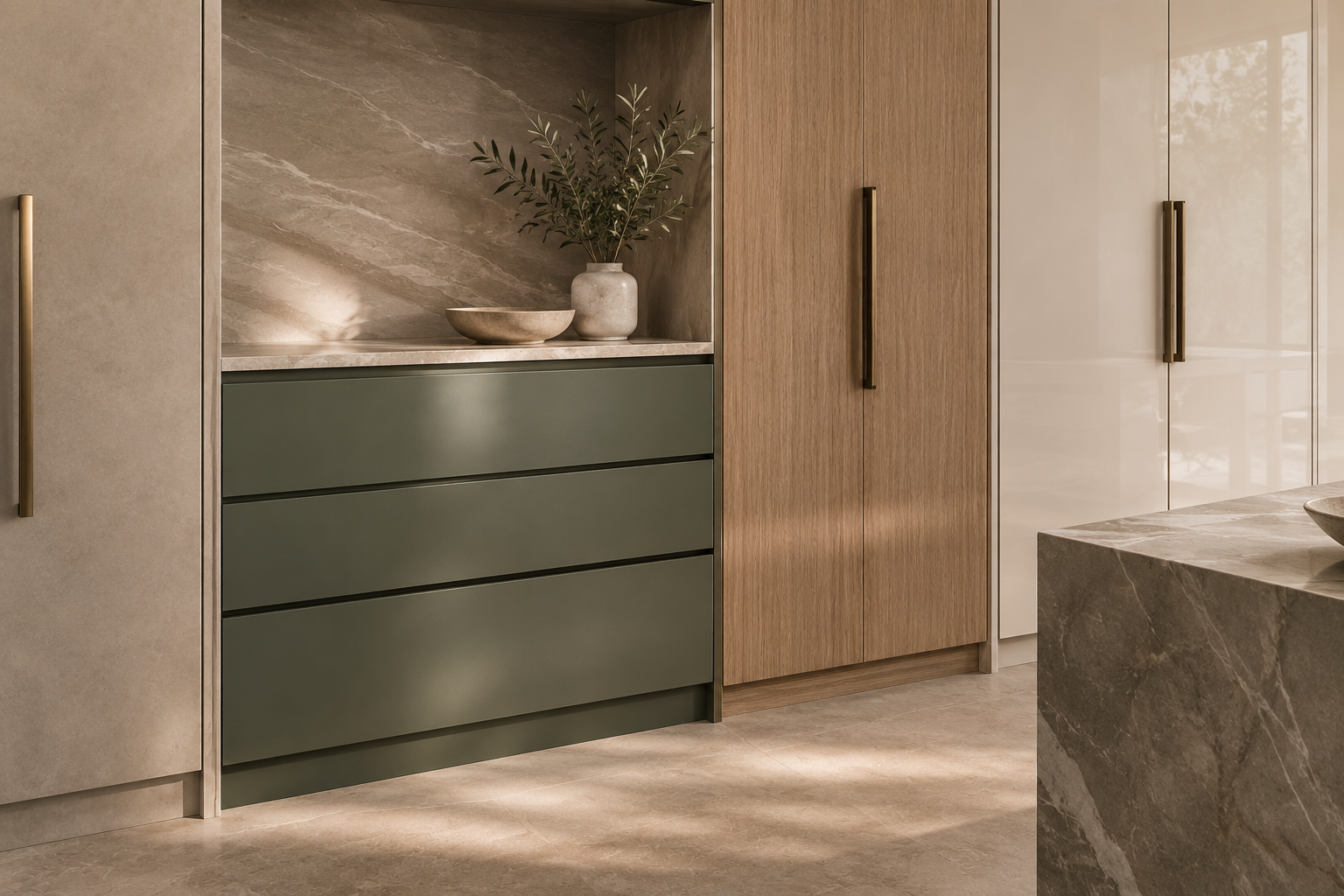
For example, a project may combine timber or timber-look feature cabinetry with neutral matt fronts, painted feature elements, aluminium-framed glass doors or contrasting architectural hardware.
Material combinations can be developed around the overall interior palette so individual finishes remain part of a coordinated architectural composition.
Coordination with Glass & Mirror Cabinetry
Solid cabinet fronts can also be combined with specialised glazed and mirrored systems within the broader ZAUS joinery collection.
These can include:
Aluminium-Framed Glass Cabinet Doors
Integrated Mirror Cabinet Doors
Display cabinetry
Glass shelving
Open shelving
Combining solid, transparent and reflective surfaces can introduce additional depth while allowing different storage areas to remain concealed, displayed or visually open according to their function.
Finish Selection
Final finish selection should be undertaken against the applicable manufacturer-supported samples and documented finish range.
Selection can consider:
Colour
Texture
Sheen
Surface character
Cabinet-front construction
Door profile
Edge treatment
Surrounding materials
Architectural hardware
Intended application
Project budget
Physical samples are particularly important where colour, grain, texture or sheen forms a significant part of the architectural design.
Whole-of-Project Joinery Coordination
Custom Cabinet Fronts & Finishes can be coordinated throughout the broader ZAUS bespoke joinery collection.
Custom Kitchen Joinery • Wardrobes & Dressing Rooms • Bathroom Vanities • Custom Residential Joinery • Aluminium-Framed Glass Cabinet Doors • Integrated Mirror Cabinet Doors • Architectural Wall Panelling
Where the same finish families are used across multiple areas, cabinetry materials, feature surfaces and architectural detailing can be coordinated to establish a consistent interior language throughout the project.
Project Development & Coordination
ZAUS develops the cabinet-front and finish specification alongside the individual joinery package.
The process can incorporate:
Review Interior Design • Define Cabinet Applications • Select Front Construction • Develop Material Palette • Review Physical Samples • Select Colours & Textures • Define Profiles & Detailing • Coordinate Handles & Hardware • Coordinate Feature Materials • Finalise Shop Drawings • Manufacture • Deliver • Coordinate Installation
Final materials, colours, profiles, surface treatments and compatible applications are confirmed against the applicable manufacturer-supported range before production.
Applications
Kitchen Joinery • Kitchen Islands • Wardrobes & Dressing Rooms • Bathroom Vanities • Entertainment Joinery • Studies & Libraries • Bars & Display Cabinetry • Entry Joinery • Bedroom Cabinetry • Architectural Built-Ins • Custom Homes • Luxury Residences • Apartments • Boutique Residential Projects
Material. Detail. Individual Expression.
ZAUS coordinates cabinet fronts and finishes as the visual and tactile layer of the complete bespoke joinery package.
Define the Joinery • Develop the Material Palette • Select the Front System • Select Colours & Textures • Define Profiles & Detailing • Coordinate Hardware • Review Samples • Manufacture & Deliver
The result is a coordinated cabinet-front and finish palette developed around the architecture, material language, functionality and individual character of each project.
A considered palette of cabinet fronts and finishes, developed around the material language of each project.
ZAUS Custom Cabinet Fronts & Finishes provides a coordinated selection of decorative surfaces, door styles and architectural detailing for bespoke kitchens, wardrobes, bathroom vanities and custom residential joinery.
Each finish package can be developed alongside the broader joinery design, allowing cabinet fronts, end panels, feature elements, profiles, handles and surrounding materials to be considered as one complete composition.
From understated matt surfaces and natural timber expressions through to profiled painted doors, high-gloss finishes and contrasting feature fronts, different materials and surface treatments can be combined according to the architectural character, performance requirements and budget of the individual project.
Double-Faced Decorative Cabinet Fronts
Double-faced decorative board provides a versatile cabinet-front solution across a broad range of contemporary joinery applications.
Depending on the selected manufacturer-supported collection, finishes can include:
Solid colours
Architectural whites
Warm and cool neutrals
Grey and darker tones
Timber-look surfaces
Stone-inspired surfaces
Textured decorative finishes
These materials can be used across cabinet doors, drawer fronts, end panels and coordinated joinery elements to establish a consistent material language throughout the cabinetry.
PET Cabinet Fronts
PET surfaces provide a refined contemporary finish particularly suited to clean, streamlined cabinetry.
Depending on the selected manufacturer-supported range, options can include:
Matt finishes
Skin-feel matt surfaces
Selected high-gloss finishes
Solid colours
Neutral tones
Selected decorative surfaces
Timber-inspired finishes
PET fronts can be coordinated with integrated handle details, handleless profiles or architectural handles according to the cabinetry design.
UV-Finished Cabinet Fronts
UV-finished cabinet fronts provide another contemporary surface option for kitchens, wardrobes and custom residential cabinetry.
The manufacturer-supported collection includes selected tactile, decorative and high-gloss surface treatments, allowing the finish to be selected according to the desired visual character of the joinery.
UV fronts can be used across complete cabinetry compositions or introduced selectively alongside other materials to create contrasting feature elements.
Vacuum-Formed Cabinet Fronts
Vacuum-formed fronts provide greater freedom in door shape, edge treatment and surface detailing than conventional flat decorative board.
Depending on the selected manufacturer-supported range, configurations can include:
Flat fronts
Minimally detailed fronts
Routed designs
Profiled doors
Shaker-inspired profiles
Contemporary linear detailing
Solid-colour surfaces
Timber-look finishes
Textured decorative finishes
This allows cabinetry to move beyond completely flat contemporary fronts while remaining part of the same coordinated custom joinery package.
Profiled Cabinet Doors
Profiled cabinet fronts can introduce depth, shadow and architectural detailing to the cabinetry elevation.
Depending on the design direction, profiles can range from restrained linear detailing through to more pronounced routed and framed door styles.
These fronts can be particularly suited to:
Feature kitchens
Kitchen islands
Wardrobes
Bathroom vanities
Bars
Entertainment cabinetry
Residential built-ins
Profile scale, door proportions and surrounding cabinetry should be considered together to maintain a balanced overall composition.
Painted Cabinet Fronts
Painted cabinetry provides greater flexibility where a refined solid-colour finish or more detailed profiled door design is required.
Painted fronts can be incorporated across:
Flat-panel cabinetry
Profiled cabinet doors
Shaker-inspired fronts
Feature cabinetry
Kitchen islands
Wardrobes
Bathroom vanities
Residential joinery
Painted finishes can be used throughout an entire joinery package or selectively alongside timber, decorative board and other surfaces to create material contrast.
Final colours, sheen levels and applicable door profiles should be selected from the supported manufacturer finish range.
Timber & Veneer Cabinet Fronts
Natural timber veneer and selected timber options provide a warmer and more natural material expression for premium architectural applications.
Timber and veneer can be incorporated across complete cabinetry compositions or introduced selectively as feature elements alongside painted and decorative surfaces.
Applications can include:
Kitchen cabinetry
Kitchen islands
Wardrobes and dressing rooms
Bathroom joinery where suitable
Entertainment cabinetry
Bars
Display cabinetry
Architectural built-ins
Natural grain, tone and visual character can vary between individual pieces, forming part of the inherent material expression of timber and veneer.
Timber-Look Finishes
Where the appearance of timber is desired without specifying natural timber or veneer, selected decorative surface collections can provide timber-look alternatives.
These finishes can introduce grain, texture and warmth while maintaining the consistency of a manufactured decorative surface.
Depending on the selected collection, timber-look finishes can be coordinated across cabinet fronts, internal cabinetry, end panels and other joinery elements.
Matt & Tactile Surfaces
Matt and tactile finishes can provide a softer visual expression than conventional gloss cabinetry.
Depending on the selected material family, these surfaces can include smooth matt, low-sheen and skin-feel finishes across architectural neutrals, darker colours and selected decorative expressions.
Matt finishes can be particularly effective within larger cabinetry compositions where a restrained surface character is preferred.
Gloss Finishes
Selected PET, UV and other manufacturer-supported surface systems can provide higher-gloss cabinet-front options.
Gloss surfaces can introduce greater reflection and visual depth and may be used across complete cabinetry elevations or selectively as feature elements.
The appropriate finish should be considered alongside lighting, surrounding materials and the intended architectural character of the space.
Cabinet Front Profiles & Detailing
Cabinet fronts can be coordinated with different architectural detailing approaches according to the selected material and door system.
Configurations can include:
Flush flat-panel cabinetry
Integrated finger-pull details
Handleless profiles
Shadow-line detailing
Routed doors
Profiled fronts
Framed and Shaker-inspired designs
Architectural handles and pulls
Coordinated end panels
Feature panels
This allows the cabinetry to respond to different architectural styles without being restricted to a single visual language.
Handleless Cabinetry
Selected cabinet-front systems can be coordinated with integrated profiles and opening methods to create clean handleless elevations.
Depending on the cabinetry design, this can include finger-pull details, recessed profiles, push-to-open hardware or other compatible opening arrangements.
Front construction, edge detailing, hardware and required clearances should be considered together when developing a handleless cabinetry system.
Architectural Handles & Pulls
Where exposed hardware forms part of the design, cabinet fronts can be coordinated with architectural handles and pulls.
Handle dimensions, position, finish and proportion can be considered alongside the cabinet-front material and surrounding joinery to create either a restrained detail or a stronger feature element.
The selected handle system should also be coordinated with door and drawer construction before manufacture.
End Panels & Feature Elements
Cabinet-front materials can extend beyond doors and drawers to create a more resolved joinery composition.
Depending on the project, matching or complementary finishes can be incorporated into:
End panels
Island panels
Tall-cabinet surrounds
Open shelving
Feature panels
Display cabinetry
Integrated niches
Architectural wall elements
This allows the selected finish palette to continue across the broader joinery rather than terminating at the cabinet fronts.
Combining Materials & Finishes
A single joinery package does not need to use one cabinet-front material throughout.
Different surfaces can be combined to define individual areas or functions within the same composition.
For example, a project may combine timber or timber-look feature cabinetry with neutral matt fronts, painted feature elements, aluminium-framed glass doors or contrasting architectural hardware.
Material combinations can be developed around the overall interior palette so individual finishes remain part of a coordinated architectural composition.
Coordination with Glass & Mirror Cabinetry
Solid cabinet fronts can also be combined with specialised glazed and mirrored systems within the broader ZAUS joinery collection.
These can include:
Aluminium-Framed Glass Cabinet Doors
Integrated Mirror Cabinet Doors
Display cabinetry
Glass shelving
Open shelving
Combining solid, transparent and reflective surfaces can introduce additional depth while allowing different storage areas to remain concealed, displayed or visually open according to their function.
Finish Selection
Final finish selection should be undertaken against the applicable manufacturer-supported samples and documented finish range.
Selection can consider:
Colour
Texture
Sheen
Surface character
Cabinet-front construction
Door profile
Edge treatment
Surrounding materials
Architectural hardware
Intended application
Project budget
Physical samples are particularly important where colour, grain, texture or sheen forms a significant part of the architectural design.
Whole-of-Project Joinery Coordination
Custom Cabinet Fronts & Finishes can be coordinated throughout the broader ZAUS bespoke joinery collection.
Custom Kitchen Joinery • Wardrobes & Dressing Rooms • Bathroom Vanities • Custom Residential Joinery • Aluminium-Framed Glass Cabinet Doors • Integrated Mirror Cabinet Doors • Architectural Wall Panelling
Where the same finish families are used across multiple areas, cabinetry materials, feature surfaces and architectural detailing can be coordinated to establish a consistent interior language throughout the project.
Project Development & Coordination
ZAUS develops the cabinet-front and finish specification alongside the individual joinery package.
The process can incorporate:
Review Interior Design • Define Cabinet Applications • Select Front Construction • Develop Material Palette • Review Physical Samples • Select Colours & Textures • Define Profiles & Detailing • Coordinate Handles & Hardware • Coordinate Feature Materials • Finalise Shop Drawings • Manufacture • Deliver • Coordinate Installation
Final materials, colours, profiles, surface treatments and compatible applications are confirmed against the applicable manufacturer-supported range before production.
Applications
Kitchen Joinery • Kitchen Islands • Wardrobes & Dressing Rooms • Bathroom Vanities • Entertainment Joinery • Studies & Libraries • Bars & Display Cabinetry • Entry Joinery • Bedroom Cabinetry • Architectural Built-Ins • Custom Homes • Luxury Residences • Apartments • Boutique Residential Projects
Material. Detail. Individual Expression.
ZAUS coordinates cabinet fronts and finishes as the visual and tactile layer of the complete bespoke joinery package.
Define the Joinery • Develop the Material Palette • Select the Front System • Select Colours & Textures • Define Profiles & Detailing • Coordinate Hardware • Review Samples • Manufacture & Deliver
The result is a coordinated cabinet-front and finish palette developed around the architecture, material language, functionality and individual character of each project.